
Songs for Good: The Story of Amnesty International's Music
While the world may know Amnesty International for their work on human rights activism, they also produced many interesting forays into the world of music. From global tours to compilation albums, the organization’s impact has been felt in both the worlds of activism and music.
Written by Declan Garvey
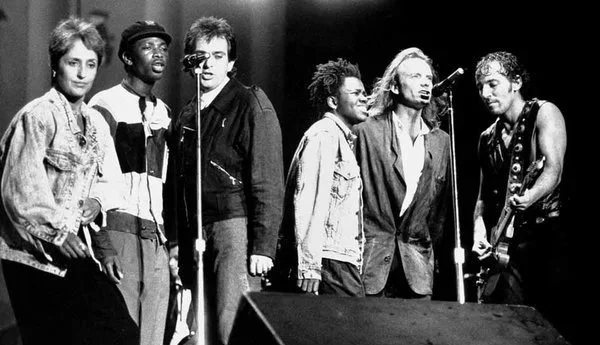
Photo courtesy of John Roca
Amnesty International is a non-governmental organization active across the globe, with a focus on the safeguarding of human and group rights. The organization’s work is celebrated around the world, with them even receiving a noble peace prize in 1977. English lawyer Peter Benenson founded it in 1961. He created the organization in reaction to an article he read about two students in Portugal who were sentenced to seven years in prison after toasting to freedom. Portugal at the time was in the authoritarian “Estado Novo” period of its history. Political repression and human rights violations were defining factors of this turbulent time. The eventual downfall of the long-standing regime would commence with the playing of a Portuguese folk song over the radio, however this is just one part of a much larger story. Amnesty International has broadened its scope from focusing initially on prisoners of conscience to now also campaigning against torture, the death penalty, and other related topics.
Amnesty International began its first ventures into the world of entertainment in the ‘70s with a series of benefit comedy shows. These shows would eventually evolve to include music with their concert series called ‘The Secret Policeman’s Ball.’ Pete Townshend, guitarist for The Who, was recruited to perform, along with performer and LGBTQ+ activist Tom Robinson. The organization would later re-release many of these performances in popular compilation albums. Following the success of the first ‘Secret Policeman's Ball', Amnesty International organized another show, this time titled ‘The Secret Policeman’s Other Ball.’ Artists like Sting, Eric Clapton, Jeff Beck, Bob Geldof, Phil Collins, and Donovan played in this sequel concert.
In 1986, Amnesty International would enter the musical space again following a break in activities. The 1985 Live Aid benefit shows became a cultural phenomenon, with 1.5 billion people tuning in to watch the performances. Stars like Freddie Mercury, Paul McCartney, Tina Turner, and Bob Dylan all drew attention to this massive show. Seeing the success of Live Aid, Amnesty International decided to organize a series of concerts called ‘A Conspiracy of Hope,’ which looked to raise awareness for human rights by bringing attention to the work that they do, with the year coinciding with the organization's 25th anniversary. The tour consisted of 6 shows in various cities across the US, where U2, The Police, Lou Reed, and Joan Baez were all featured performers. At the end of each show, the performers collaborated in an ensemble rendition of Bob Dylan’s “I Shall Be Released,” a song whose lyrics ooze with references to themes of freedom. The ‘A Conspiracy of Hope’ version is more fast-paced than Dylan’s original version and features an eclectic mix of various styles of singing that each of the performers possessed. The shows proved to be massively successful, not only raising America’s awareness of Amnesty International, but also producing a significant increase in member signups.
Due to the success of ‘A Conspiracy of Hope,’ Amnesty International expanded its ambitions to celebrate the 40th anniversary of the Universal Human Declaration of Rights signing. This time, they organized a global tour called ‘Human Rights Now!’ Once again, Sting of The Police would volunteer his talents for the concerts. Politically outspoken rock icon Bruce Springsteen also volunteered as well as legendary singer songwriter Tracy Chapman would also feature, with her recently gaining major success following her emphatic performance at a benefit show in honor of South African anti-apartheid activist Nelson Mandela. The tour this time would also no longer take place in just the US, this time heading to a total of 15 different countries. Artists in this tour also hosted press conferences to introduce the idea of the protection of basic human rights, and the hundreds of thousands of attendees all received copies of the Universal Declaration of Human Rights.
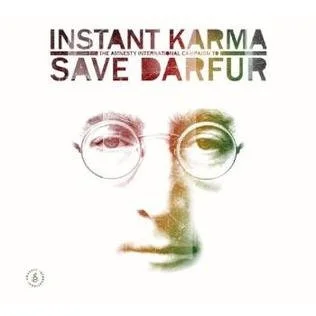
Image courtesy of Wikipedia
In 2007, Amnesty International released its first album under its record label, aptly named Amnesty International. The album, titled Instant Karma: The Amnesty International Campaign to Save Darfur, featured artists performing John Lennon covers. All the proceeds from this album went towards humanitarian efforts in the Darfur region of Sudan. The conflict in Darfur was extremely complicated, but the region had been witnessing mass ethnic cleansing of non-Arab populations by the government and government aligned forces following the outbreak of violence between rebels and the government. This, in turn, led to mass displacement and a major humanitarian crisis, which would lead to hundreds of thousands of deaths and the displacement of millions. The album itself is a medley of 23 different artists spanning across multiple genres. The Postal Service gives their techno drum loop infused take on “Grow Old With Me," the The Black Eyed Peas cover “Power to the People,” featuring a thumping beat and background vocals performed by a church choir. Youssou N'Dour performs “Jealous Guy,” with lyrics that switch between his native tongue of Wolof and English and swaying guitar playing.
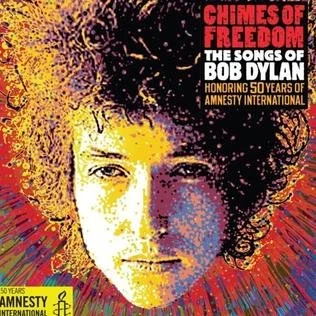
Image courtesy of Wikipedia
The release of Instant Karma proved successful enough to warrant Amnesty International’s release of another album. Conveniently, this aligned with the organization’s 50th anniversary. In 2011 they released Chimes of Freedom: The Songs of Bob Dylan Honoring 50 Years of Amnesty International. The album itself was a behemoth. It originally included 73 songs and ran over 5 hours. It featured Maroon 5 performing “I Shall Be Released,” My Chemical Romance playing “Desolation Row,” The Queens of the Stone Age singing “Outlaw Blues,” and a plethora of additional covers. Somali-Canadian rapper K’Naan’s cover of “With God on Our Side” is one of the highlights of the album, with many of the lyrics adjusted to reflect upon his upbringing in Somalia, and the smart use of the piano helps to give the song a grandiose feel. Ximena Sariñana also has a notable cover of “I Want You” with her vocals, techno beats, and usage of piano, creating a yearning ballad. Mark Knopfler also released a noteworthy version of “Restless Farewell” with his melancholy vocals, use of a resonator guitar, and use of a fiddle, forming an impressive interpretation of the source material. The massive variety of artists included on the album helped launch it to major commercial success. It reached number 11 on the Billboard 200, with all the proceeds going towards Amnesty International's overall operations.
Both Instant Karma and Chimes of Freedom are well worth a listen. The diverse range of artists and genres covered results in satisfaction for a wide array of music listeners. Both of these albums cover songs written by highly influential singer-songwriters, which is a facet of uniqueness that greatly contributed to their success. Amnesty International's forays into music were extensive and varied, bringing a large array of artists together to use music to contribute to good causes. With their benefit shows influencing many other organizations to put on similar events for charitable causes. Unfortunately, their production over the past few years has slowed down, but their previous work is undoubtedly worth checking out, if not at least for the good causes that it contributes to.