
Album Anniversaries: 20 Years of Infinite Emotions with John Mayer’s “Continuum”
Two decades after the stellar guitarist’s third studio album, John Mayer’s varying perspectives on love, time, and the human condition still stand out in music’s own continuum.
Written by Valeria Mota
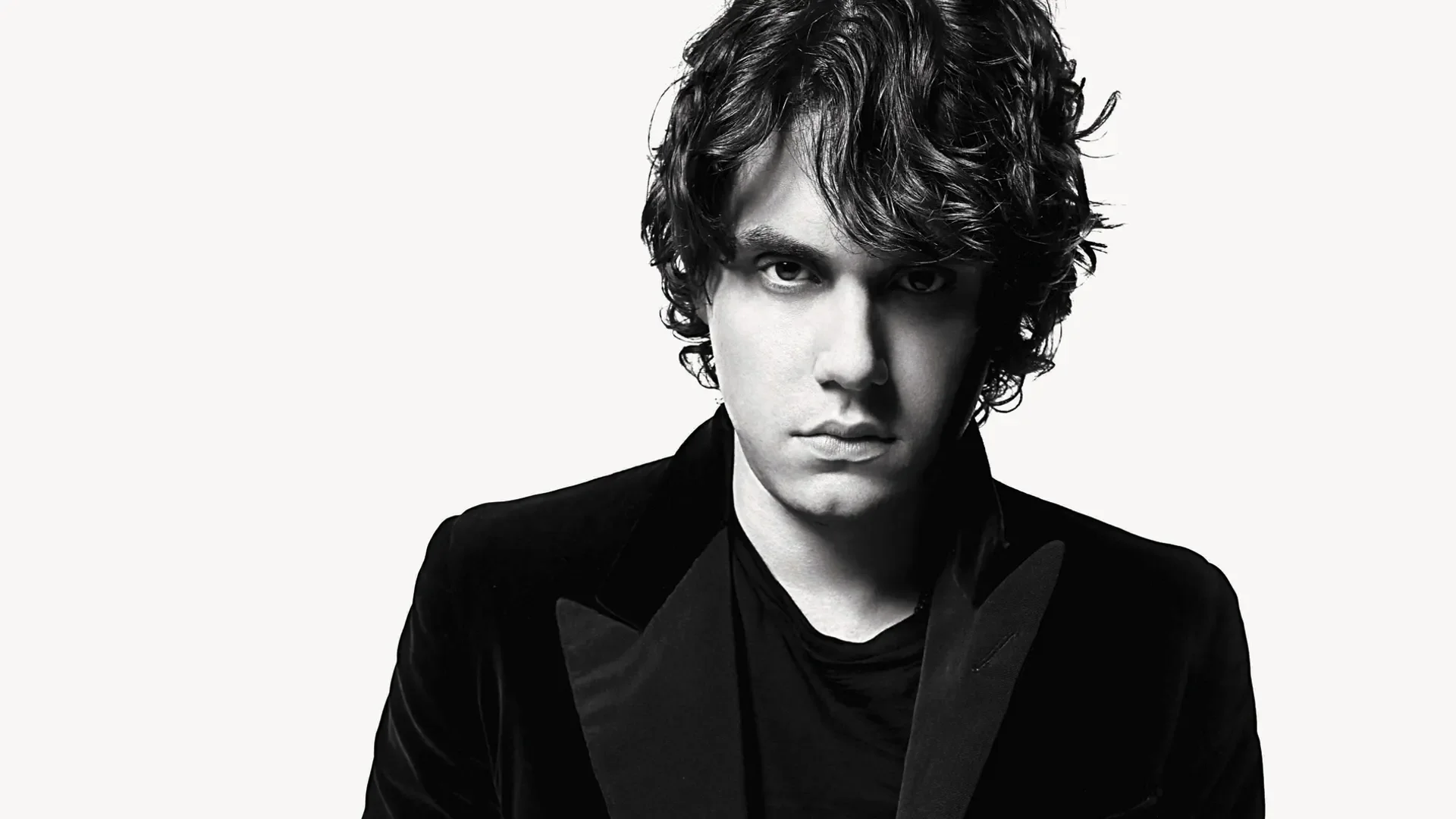
Photo courtesy of Medium
The year is 2006, and John Mayer’s first two records, 2002’s Room for Squares and 2004’s Heavier Things, racked up hit singles and critical acclaim for the pop-rock star, including a Grammy for Best Male Pop Vocal Performance for the runaway hit, “Your Body is a Wonderland.” While the success could have easily boxed Mayer into pop-idol clichés, the artist wasn’t even remotely done with his sonic exploration. The John Mayer trio — made up of bassist Pino Palladino, drummer Steve Jordan, and the titular guitarist — gave Mayer an outlet to experiment with the array of music in his live album Try!. The album culminates in an explosive mix of guitar solos worthy of Mayer’s major musical influences within the blues, soul, R&B, and hard rock space. Mayer only delved further into the sounds of his idols like Jimi Hendrix, Cream, and Stevie Ray Vaughn, and the final result was Continuum, a full display of the artist’s lyrical and musical virtuosity.
The album cover for John Mayer’s magnum opus Continuum is deceptively simple. The gray cover features the title in an all-caps custom font that subtly connects the word’s letters to each other; most notably, the C connects to the O to cleverly form an infinity symbol. What could easily have been a designer’s afterthought actually offers an artistic depiction of Continuum’s central themes: of time, life, and most importantly, change. Time passes on this infinite continuum, and it is up to us to find our place in it. This is exactly what the singer-songwriter explores on his third studio album, resulting in a compact, varied, and vulnerable listening experience that cemented Mayer as a fully-fledged guitar hero.
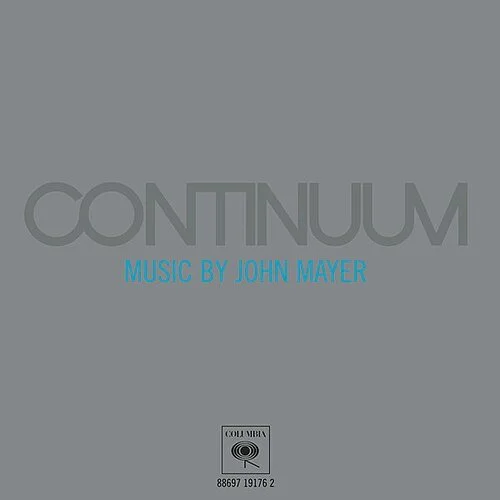
Photo courtesy of Wikipedia
In an interview with Esquire, Mayer discussed the esoteric album title, confessing his obsession with time and how he’s “constantly crunching the numbers to get some sense of where [he stands] in the continuum.” This introspection kicks off with the album’s opening track and first single, “Waiting on the World to Change.” The two-time Grammy-winning song is carried by cheery instrumentals, a jazzy interlude, and a stand-out guitar solo, yet the track immediately stands out as a Curtis Mayfield-inspired, bona fide protest song. Mayer echoes his generation’s pessimistic outlook on the future, lamenting corruption and the youth’s inability to successfully do anything about it: “It’s not that we don’t care / We just know the fight ain’t fair.” Yet, the track’s optimistic production makes sense as Mayer rallies his peers to bring change when it’s their turn by proclaiming, “One day our generation / Is gonna rule the population.” Twinkling glockenspiels elevate the song’s ultimately hopeful sentiment of his generation’s stance in the continuum.
While “Waiting on the World to Change” lyrically steered away from the love songs that made Mayer a household name, the singer returned to those roots with the sultry “I Don’t Trust Myself (With Loving You).” The suave, wah-pedaled guitar showcases Mayer’s intricate finger-picking as he confesses desperate love paired with emotional baggage, warning his lover to “Hold on to whatever [she finds].” While he spends the song questioning his possible actions, he also questions his partner: “Who do you love; me or the thought of me?” The second song on the album explored a silky style new to Mayer while also reminding listeners that he remains a lover through and through.
But soon enough, the emotional whiplash of the virtuoso’s Continuum kicks off with the broody “Belief,” a warning packed with an analysis of conviction and a protest of war with its lyrics and Dylan-esque imagery. The consistent drums mimic the drums of a battleground, reinforcing Mayer’s protest of the inherent inflexibility in our belief systems: “Belief is a beautiful armor / But makes for the heaviest sword / Like punching underwater / You never can hit who you're trying for.” By this point in the album, Mayer’s masterful guitar has cemented itself as an additional vocalist on the album, helping the singer skillfully transition from everyday heartaches to weighty critiques.
“Belief” lends a critique on external perspectives, but “Gravity” goes within. The album’s third single and one of Mayer’s most popular songs to date is described by the singer as “the most important song he’s ever written,” as it appropriately centers him to fulfill his “full-time job of not screwing up.” The three previous tracks offer various views on change, either patient or cautious, but here we see Mayer actively looking for it. By cleverly playing with the concept of gravity “working against [him],” the singer desperately tries to free himself from the things that bring him down, whether it’s responsibility, the future, or the continuum in which he finds himself. He repeatedly pleads to no one, “Keep me where the light is,” which is not only the namesake of his smash 2007 tour, but a sort of mantra to remind oneself to keep going, to persist against gravity and chase the light, whatever it may be.
The emotional shifts persist as Mayer expresses gratitude with the hopeful “The Heart of Life.” Complete with laidback acoustic guitar and an uplifting final chorus, the fifth track of Continuum highlights the sentimental rollercoaster of Mayer’s optimistic outlooks as he contemplates the general human condition: “Pain throws your heart to the ground / Love turns the whole thing around / No, it won't all go the way it should / But I know the heart of life is good.” Yet, the insecurities creep back in with “Vultures,” where the grooviest guitar chords are paired with some of the most existential lyrics on the album. “How do I stop myself from being just a number?” Mayer asks. “How will I hold my head to keep from goin' under?” The singer describes “vultures,” literal or metaphorical, who are out to get him, but he stays determined to “walk through the fire” like he does “when the world keeps testing [him].” Not only does “Vultures” once again prove Mayer’s immaculate guitar abilities, but it also proves that he is carrying the reflections from the previous tracks throughout the rest of the project.
Arguably the most contemplative moments of Continuum are compacted into the almost five-minute “Stop This Train,” whose soft guitar progression pairs perfectly with the vulnerable lyrics. The singer-songwriter, who was 28 at the time of the song’s release, reflects on the underlying panic of growing up and compares the passage of time to an unstoppable train. The entire track drips with a strangely comforting melancholy as Mayer describes a conversation with his father and finally grasps the reality of his — and everybody’s — progress: “John, honestly, we’ll never stop this train.” “Stop This Train” engages with Continuum’s overall themes the most directly, with the cover’s infinity symbol perfectly mimicking the infinite locomotive. The result is a track displaying Mayer’s musical prowess while also packing the heaviest emotional punch.
After the crushing “Stop This Train,” Mayer takes three back-to-back songs to discuss the songwriting subject he knows best: Love. The romantic three-song run starts off with Mayer’s biggest hit to date, “Slow Dancing in a Burning Room.” The songwriter describes this track as “[realizing] the relationship is coming to an end and one person wants to admit it faster than the other person wants to.” Adored for its impassioned guitar solo and elevated by hissing cymbals that make the song itself sound like it's turning into ashes, the song’s vivid metaphor for a doomed relationship carries equal parts anger, frustration, and resignation. Mayer then switches gears to a more optimistic take on love with an ardent rendition of Jimi Hendrix’s “Bold as Love.” If there’s any track on Continuum that flaunts Mayer’s innate rock abilities, it’s this one. The singer’s approachable voice impressively lives up to Hendrix’s original rasp and establishes Mayer as one of the greatest guitarists of all time. Eventually, though, the melodrama of Mayer’s love life returns with the gut-wrenching “Dreaming With a Broken Heart,” with the piano-driven instrumentals starkly contrasting with the previous guitar-powered tracks. The third-to-last song on the album encapsulates the stages of romantic grief, building up to Jordan’s explosive drums and Mayer’s aching vocals as he asks his lover if he has to “fall asleep with … roses in [his] hands” to reach her once more. “Dreaming With a Broken Heart” is one of the emotional lows of the album, further emphasizing the album’s thematic volatility after the grandness of “Bold as Love” or optimism of “The Heart of Life.”
But like life, what comes down must go up — after Mayer reaches a crushing low in “Dreaming With a Broken Heart,” he still manages to hope again, closing the album with two hopeful tracks, “In Repair” and “I’m Going to Find Another You.” The preachy organs and winding drums in “In Repair” match Mayer’s valiance as he finally decides to “set [his] heart right,” even though he’s “never really ready” for it. He closes the song with a promising chant: “I’m in repair / I’m not together, but I’m getting there.” The track fits into the album like the ending credits of a coming-of-age movie, and it serves as a reminder to listeners that they can move forward in the continuum whenever they want.
“In Repair”’s message extends to the artist’s romantic life with the final track of the 2006 masterpiece. “I’m Gonna Find Another You” serves as a proclamation of openness to connection, with Mayer seemingly dropping the baggage holding him back in “I Don’t Trust Myself (With Loving You).” The guitarist leans into soulful instrumentals and croons for the shortest track of the album, not only cementing his message of resilience amidst change, but leaving listeners wondering if there’s even a genre that Mayer cannot excel at.
And with that, the emotional and musical whirlwind of John Mayer’s Continuum comes to a close. The album was met with raving reviews and commercial success, including two Grammy wins for Best Pop Vocal Album and Best Male Pop Vocal Performance for “Waiting on the World to Change” and a Rolling Stone recognition as one of the best albums of all time. Mayer built on the record’s success with the ‘Where the Light Is’ tour and concert film, where he performed intimate covers, ranging from Tom Petty to Jimi Hendrix, and extended versions of his own tracks, complete with improvised rocking and Mayer’s signature guitar skills. The live renditions further prove Continuum’s central message: everything changes, even music. As Mayer develops as an artist over the course of his decades-long career — and listeners develop as people and come into their own — the only thing that remains constant in life’s eternal continuum is change. As Continuum reaches 20 years, it’s heartwarming to know that despite life’s changing circumstances, there are albums out there that serve as a rock to lean on, and ultimately, change alongside you.