Interview: Anjimile Discuss Freedom in Fashion, Punk, and Disconnecting
After the release of their latest album You’re Free to Go, Anjimile sat down with Afterglow to discuss what freedom means to him.
Written by Noah Keany
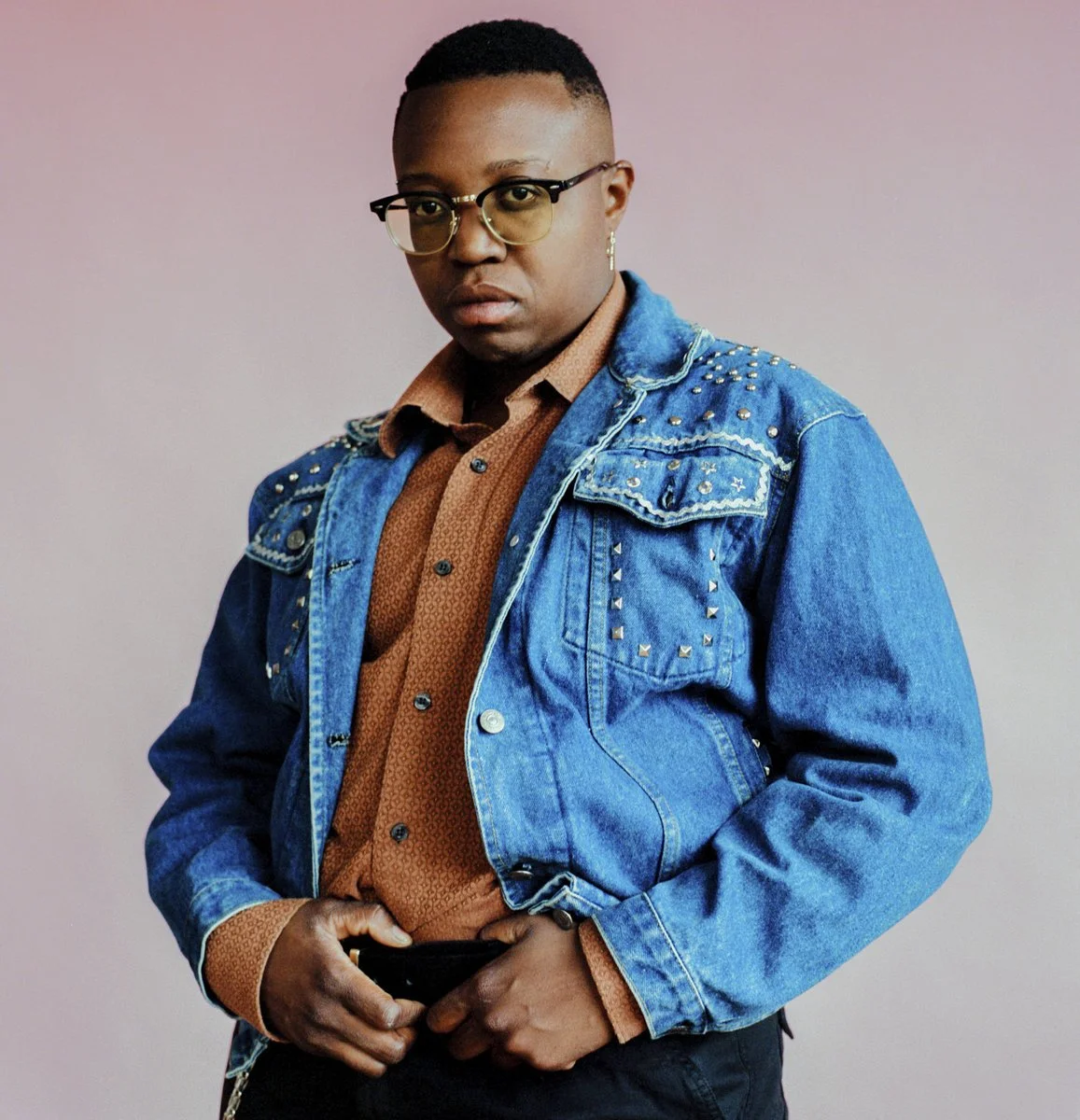
Photo courtesy of Bandcamp
Anjimile Chithambo is an indie folk artist from Boston who recently released his third album You’re Free to Go. From his mesmerizing acoustic guitar to devastating lyrics, this album embraces freedom in all of its never-ending joy and gut-wrenching pain. Afterglow talked with Anjimile to explore his influences, artistic freedom, and future before his Austin show.
Afterglow: The title track of your new album was inspired by a new relationship and embracing non-monogamy. From what I've read, it kind of became like a thesis statement for the whole record. Did you kind of come into this record knowing that's what you wanted to center it around? Or did you start writing music and it kind of revealed itself to you?
Chithambo: I think it was more so that the thesis revealed itself after everything was recorded, because the theme of that song, at least for me, relates to feeling freedom in this non-monogamous relationship and feeling this excitement and magical love. But I think that the phrase “you're free to go” also has a spiritual meaning for me. That's what I would like to hear from my higher power or the universe. I think all the songs have some kind of exploration of relationships with freedom or the lack thereof and the tension there.
So in that same vein, you have described the record as opening a wound. How did you know when you were ready to kind of express that emotion, especially given that this was something that came naturally to the music? How did you know that this was the time to make a record like this?
Well, luckily once I write a collection of like 10 or so songs, I'm like, this could theoretically be an album, so I'm always trying to write maybe one song a month, just get in there and see what the feelings are. So it was a combination of reaching a point where we had maybe 10 to 12 songs to work with, which also conveniently coincided with the label being like, “Hey, we’re ready to make the next album.” And, even though it's romantic, it is really helpful to have something like a deadline.
What has made the biggest impact on your sound over the years, musically or otherwise?
Sufjan Stevens was a big, big, big influence when I was starting to write it. When I started putting out albums in 2020 I was very much on the Sufjan train and I still am. Definitely Iron & Wine, just like finger picking wise. Very inspired by that. Lyrically, a couple years ago, I started listening to Pinback and kind of emo. They have this one song, and the chorus is, “Sad I'm gonna die / Hope it's gonna happen later, later than I think.” I feel like I've really tried to incorporate that into my writing, just kind of more plain spoken than metaphorical.
Speaking of Iron & Wine, I know you got to work with San Beam on his latest record, and I've heard he's a personal hero of yours. What was it like to have somebody whose music shaped you and your sound actually singing on your album?
It was pretty surreal. I started listening to Iron & Wine when I was like 14, and I learned how to finger pick, listening to the album, Our Endless Numbered Days. And just studied his harmonies and his vibe, and then like 20 something years later, I'm getting to meet this dude, and he looks exactly like he did on the album cover, and he's so nice. It was, honestly, completely unbelievable, especially because one of the songs that he sang on is a song called “Destroying You.” When I was writing it, I was like, “Okay, I'm gonna sing it like I imagine Sam Beam would sing this. Let's go Iron & Wine with it.” I thought that specifically and so the fact that he's singing on it, I found completely outrageous. It's definitely a highlight.
What's the line between absorbing these influences and how they've pushed you in a certain way, versus letting it show in your work?
I think it usually feels like whatever music I'm listening to will just end up in the music that some element of that will end up in the music that I'm writing. It's actually pretty rare for me to be writing a song and be like, “Okay, this reminds me of XYZ band.” Like, I actually don't usually do that because it'll stress me out, but in that case, it felt like I felt good to do because what I was trying to draw from Iron & Wine specifically, was his vocal phrasing. And I was kind of getting kind of granular with it. If I'm going to be active while writing about, like the influences I'm drawing from, I kind of want to be like, “okay, but I'm just going to take like the tail of this shrimp, and then I'm gonna take like, one lobster leg over here.” Assuming music is a seafood buffet, that's my metaphor, the seafood buffet of Indie.
How do you feel your love of punk has contributed to this evolution of your songwriting style and musical style?
I love punk, and I remember when I was a teenager, I got super into ska and punk. It was to my great dismay, that I couldn't make my voice raspy, like the lead singer of Circle Jerks like ridiculous falsetto Jello Biafra from dead Kennedy's has got going on. So I was like, I can't mimic the vocal style and I can't do the phrasing, but I think I can at least relate to in my output is what I have, maybe unconsciously incorporated, is the punk spirit of doing whatever the fuck I want. Growing up and listening to Black Flag and Minor Threat. I was like, they're just feeling it. They are following their creative impulses and trusting it and also just doing whatever the fuck they want. And so I like to do whatever the fuck I want when I'm making music.
How do you think that punk influence influenced the direction of this album?
We recorded the day after Trump got elected, and we're all just like, simultaneously, womp, womp. But we're all just, so happy to be here together, you guys, like we're united. I think it's hard to say. I guess I will say it's influenced my personal attitude, especially on stage. Maybe this goes back to, like, not giving a fuck, but I'm less afraid to, like, share political opinions, because they're important. Like, free Palestine, free Congo, fuck capitalism, fuck America, you know, and I feel comfortable saying those things on stage. I feel like I'm saying these things from a place of privilege, and it's like the least I could do.
Growing up in a conservative Presbyterian Church in suburban Dallas as an African American kid who was wrestling with questions of gender and sexuality, how do you think about that journey with spirituality, and an environment that was adversarial to who you are?
I think a big part of being able to access a spirituality that felt authentic to me was the presence of music in my life from a very young age. I always felt that feeling you get when you listen to music like, “this is right. This is music and I love this.” I was later able to kind of transmute that into an aspect of my spiritual beliefs and it really helped me to just hear other messages in addition to just loving music and feeling that love and kind of relating it to what God's love was, but I was like, it's not really resonating with me, this whole like, God and Jesus thing. Feeling some of the stuff that the Bible talks about in terms of joy and peace and excitement, while listening to music, I was like maybe there's something there. I listened to a lot of Leftöver Crack in middle school and there's a song on one of their albums called “Atheist Anthem.” I think even just something like that, being exposed to kind of radical ideology, I think also would later inform my spiritual path as well be like, it feels free when I let myself listen to this band and, like, absorb these messages that this resonates with me so, like, finding spirituality in the “Atheist Anthem” somehow.
The album does hold a lot of really heavy material involving estrangement and transphobia alongside some genuine joy and tenderness. How do you sequence something like that?
I think what we ended up doing was not super conscious. We ended up kind of grouping the tunes together loosely. We picked the first third where we have our love songs, and then kind of in the middle there's a song called “Ready or Not,” and it's just very slow and just a different mood than the previous tunes, and sets the tone for the rest of the album. We call it more of a celebratory feeling and sort of exploring what freedom and love feels like. It's what my identity feels like. The second half is grappling with some of the results of that exploration, not all of which are positive like grappling with people's reactions to my identity or my relationships, and holding space for that grief in the same way that I held the space for the joy before.
I know you've talked a lot about how most of the time, you want to be teaching, and doing this kind of work outside of music. How do you figure out how you want to prioritize these things, especially when it comes to these bigger projects, like music videos, albums, and performing live?
I feel like recording is something that I can kind of make space for at any time in my life. I feel like that's easier to schedule, whereas the album release cycle, I do need to be more available for and that can be challenging. I think I've been looking at it like I'm trying to put out a record roughly, every three years. In the interim, a big change between now and maybe before is that I have other professional interests besides music and recording. I've gotten very much into youth work and I'm interested in maybe getting my teaching license. Having a more stable life and I’m 32 now, so it's less, like, “Woo, we're going out on the road!” and more like, “Okay, how can I put this in my schedule so that I can be back in time for the 2026 school year to begin? Or which jobs should I be applying for right now?” It's a delicate balance. Right now I'm just gonna plan, I'm gonna try to work at the school for nine months, and then in the summer, I'll do more shows and stuff as opportunities present themselves. At album release time, I prioritize the record, music, and touring. Then once that period ends, I'm like let me go back to stability.
You've talked about moving to Durham and moving in with your partner, raising chickens, and gardening. How does that quieter life feed the music, if it does at all?
I'm actually moving with my partner on Saturday and she lives about maybe 50 minutes west. We've been long distance for like two years, but it makes me feel really excited. I'm ready to settle down and I'm trying to grow corn. You know what I'm saying? Trying to spend less time, like posting on my Instagram story, and more time growing corn. I'm literally on the pipeline my partner wants. We're gonna build a cob house, which is made of mud and straw. I'm kind of drinking the Kool Aid. Why not? I like trees. I want to live a life that allows me to be surrounded by trees as often as possible.
I know the big theme, and even the name of the album is Your Free Go. What does that freedom actually feel like to you right now in practical terms and what is the ideal version of that for you?
I think for me right now a lot of it is just related to feeling freedom as an out trans person. I've been out and trans for a while, but I've only come out to my parents in the last five or six years. I really only came out because I was putting out an album and I was talking about being trans on the album. So right now freedom for me does look like expressing my like transness outwardly in terms of gender presentation, just wearing clothes that I feel really good in, that I feel like align with the way that I see myself, and I think it also helps that I have a #passionforfashion. I think I find freedom in exploring my own fashion aesthetic. I’m finding a lot of freedom and exploring and engaging non monogamous relationships, being in partnership with my boo thing right now, and navigating the web.
You can follow Anjimile on Instagram and stream their music on Spotify and Apple Music.
This interview has been minimally edited for clarity and length.