
Industry Insights: How Live Music Adapts in the Digital Age
In a rapidly growing digital world, live music events incorporate technology to improve access and presence for concerts, with digital tools serving as an enhancer rather than a replacement for live performances.
Written by Valeria Mota
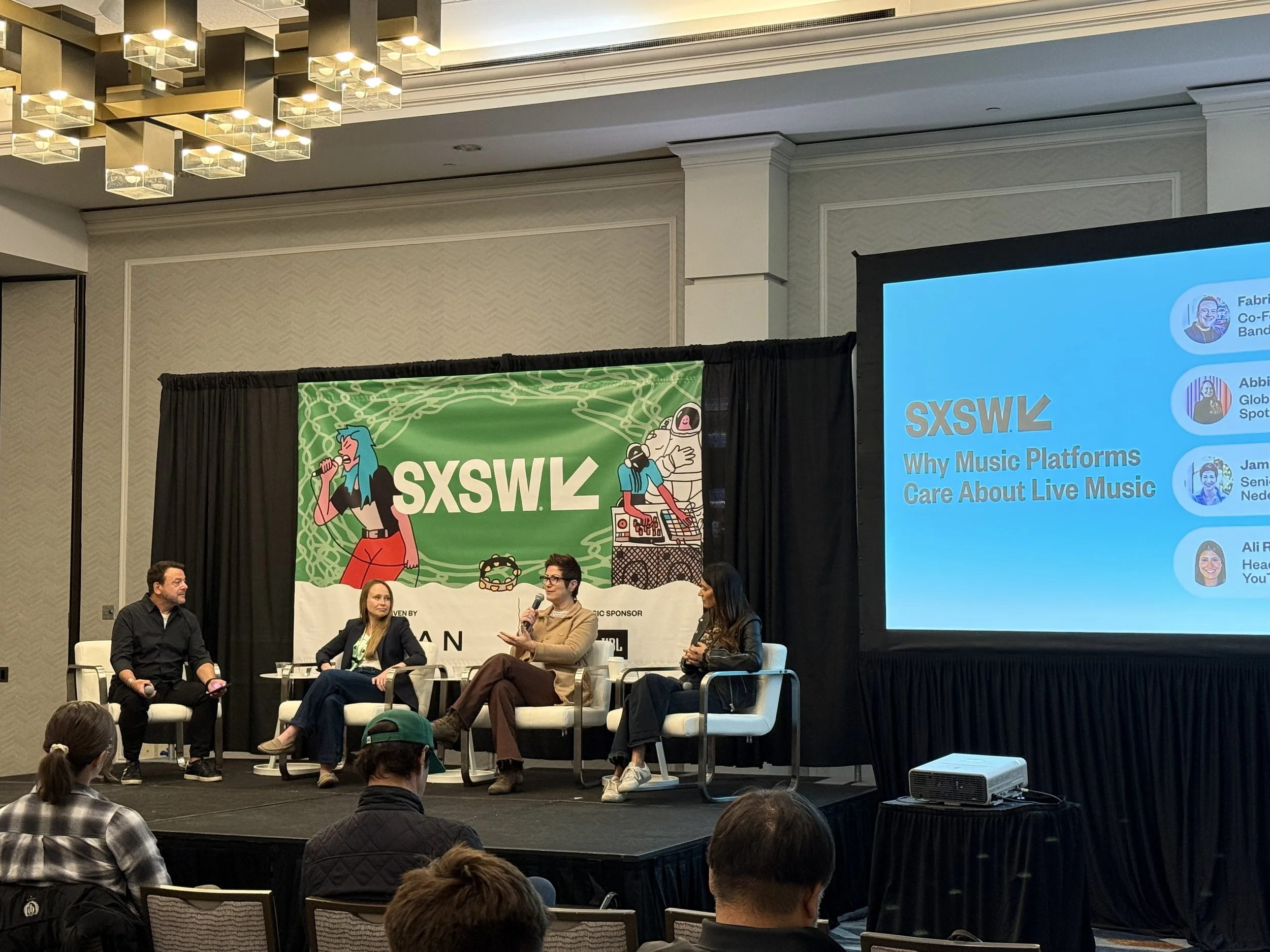
Photo by Valeria Mota
Though society may prioritize digital communication, the hottest commodity remains being in a room full of sweaty, loud people singing your favorite songs at the top of your lungs. As digital connections strengthen, music remains a core creator of live reunions. Austin’s South by Southwest festival (SXSW) has prioritized live music performances for 40 years now, yet its music conferences like “The Future of Live Music: Immersive and Interactive” and “Why Music Platforms Care About Live Music” don’t shy away from admitting that the live music experience is changing in the digital era and exploring the best ways to adapt.
In an increasingly interconnected world, the need for human interaction persists, and experts in the music industry don’t expect that to change any time soon. Ali Rivera, head of live music and artist partnerships at YouTube, referenced YouTuber QT Cinderella’s thoughts about concerts during the “Why Music Platforms Care About Live Music”: “AI can't replace live … humans are gonna crave live [events] more than ever." Abbie Riley, global business development lead at Spotify, agreed with Rivera, emphasizing the importance of live performances in "[creating] real human connection and [inviting] people into an authentic experience." Fabrice Sergent, co-founder and managing partner of concert website Bandsintown and panel moderator, even mentioned how reuniting to listen to live music remains one of society’s “last tribal experiences,” and music platforms and digital services are only facilitating access to these music events, not replacing them.
Yet, the live music experience is far from perfect, and technology can help fill some of those gaps of opportunity. Eric Krueger, head of platform and developer strategy at Meta, acknowledged how often the chaotic nature of live concerts can kill the event’s enjoyment during the “The Future of Live Music: Immersive and Interactive” conference: “At a concert, you are just running back and forth in the pit to always be in front of the artist so that you have the best view of them.” According to Matthew Celia, cofounder and creative director of creative immersion studio Light Sail VR, the COVID-19 pandemic skyrocketed interest in complementary concert experiences, and VR concerts meet the audience where they’re at — in the case of the pandemic, cooped up at home. “The Future of Live Music: Immersive and Interactive” conference emphasized technology as a tool for delivering an authentic, live music experience, still catering to humans’ best interests.
Technology can resolve some nuisances, but it’s impossible for a concert experience to be completely fixed, whether live or digital. Krueger contrasted the need to run back and forth in the venue’s pit with the difficulties of getting a VR headset ready to immerse yourself in a “live” event, and artistic choices during immersive digital concerts are often workarounds for technological limitations. Your favorite artist isn’t making eye contact with you; they’re simply intensely gazing into a strategically-placed camera that avoids pixelation issues to replicate that intimate eye contact with millions of people watching. While the moment feels personal, the mere reminder of the digital tools that get you to that moment is enough to derail the whole experience. Immersive and interactive concerts simulate the live experience as much as possible in innovative ways, but as Rivera pointed out, “AI can’t replace live.”
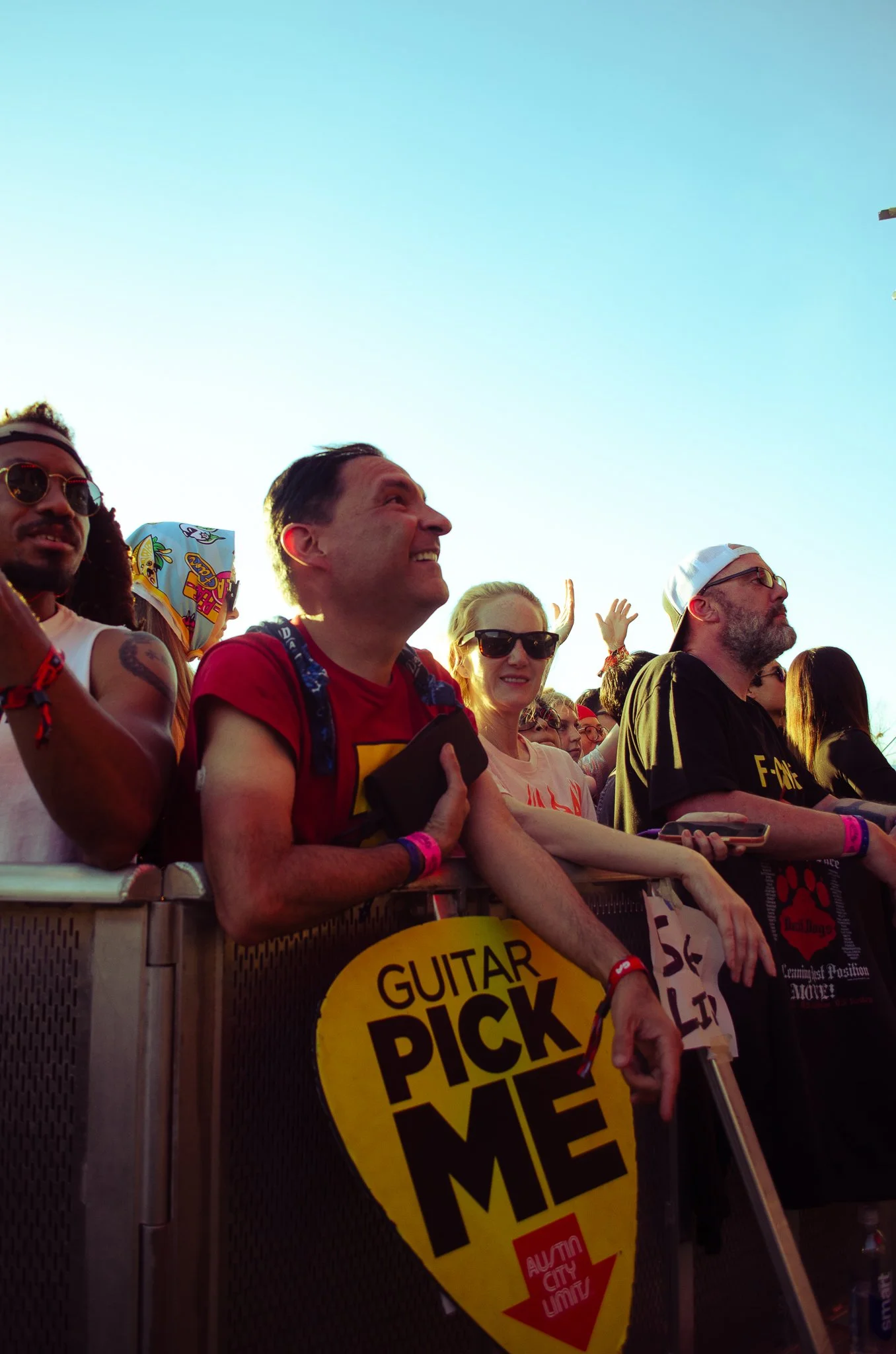
Photo by Mckenna Sefcik
Both conferences highlighted the importance of artist participation in providing an immersive digital experience as well as providing the necessary tools for fans to attend their live events. Krueger used Coldplay lead singer Chris Martin as a prime example of engaging a digital audience: “[Martin] made sure that he [locked] eyes with the camera from the B stage all the way at the front, and it settled so much better … [it’s] part of the conceit that you're selling, is that you have the audience that pay to see you, and obviously you want to put on your show, but this one little two-eyed robot is potentially millions of eyes at the same time, so you probably want to show up for that one as well … once you have an artist leaned in that way, it really does make a magical experience.” Yet, Krueger’s use of the word “conceit” only underscores the unmet intimate element of a real live experience, despite well-intentioned attempts from companies like Epic Games on Fortnite or Roblox.
Riley also mentioned Spotify’s collaboration with Bandsintown and 45 other global partners in providing Spotify users with information about upcoming shows, stressing that the artist remains a focal point of communication and connection between live performances and fans. Riley cited Spotify’s discoveries that "when a fan goes to a live performance, [Spotify sees] they stream that artist more on Spotify after they come back" to highlight the virtuous cycle created from Spotify’s and YouTube’s partnership with Bandsintown, created by putting live interaction at the forefront of the digital music experience. Ultimately, the “Why Music Platforms Care About Live Music” panel concluded that music platforms pave the way for live concert attendance through their digital use.
Nonetheless, there are some holes that digital methods simply cannot cover. The panelists at “The Future of Music” conference admitted that immersive VR experiences are currently only available at large-scale arenas, neglecting smaller, independent venues as well as the indie artists that usually perform in them. The advancements in interactive events may enhance global stars’ already elaborate concerts, but at what cost? If live music can’t be improved for breakthrough artists as well, streamlined digital experiences directly harm independent artists and venues that provide exciting live performances just as magical as large-scale VR-enhanced concerts.
While still supplying information on upcoming live events, Spotify and YouTube acknowledge gaps in its current practices that are yet to be resolved. Riley touched on Spotify’s careful balance between providing artists with necessary marketing metrics while maintaining user privacy, while Rivera admitted that YouTube analytics are challenging for anyone who isn’t a “data nerd,” requiring a lot of time that “a lot of artists don’t have” to appropriately understand the platform’s metrics and adapt to their results. The platforms’ advancements to concert listings and access to detailed analytics remain rather US-centric, with Riley acknowledging the need to “be better connected globally.” When asked by Afterglow about the possibility of the platforms providing connections between artists and independent venues, Riley hinted at Spotify’s current development of the service, while Rivera acknowledged that the opportunity isn’t something that YouTube has considered yet.
Ultimately, the throughline of both conferences emphasized the importance of live events, with concerts acting as an anchor and technological advancements acting as an amplifier of an event’s most memorable moments. “The Future of Live Music: Immersive and Interactive” panel gave a glimpse at how live events are transforming into digital concerts, while the “Why Music Platforms Care About Live Music” conference stressed the importance of conserving these live events in a world where digital tools can often overpower live experiences. Technology can only enhance the concert experience, not replace it, and the future points to digital tools facilitating authentic live events while still emphasizing human connection.