
Album Review: Searows and the Invincible Ocean of ‘Death in the Business of Whaling’
Searows’ second studio album exudes escapism and artistry, a record that allows you to accept sadness with grace.
Written by Claire Hookstra

Photo courtesy of Marlow Osteara
Content warning: brief mentions of self-harm
Searows, the indie music project of Alec Duckart, released his second album, Death in the Business of Whaling, on January 23, 2026. After releasing his first record, Guard Dog, independently, Searows was then the first artist signed to indie singer Matt Maltese’s record label, Last Recordings On Earth.
Death in the Business of Whaling is an eerie, emotional, and compelling step up from Searows’ already successful debut album. Recorded in an isolated barn in the Pacific Northwest, the album captures the pining feeling that exudes from oceanic imagery conveyed in physical art. With metaphors of whales, oceans, and cyclones, Searows composed a work that exudes heartache, causing listeners to discover untapped emotions of self-realization and discovery deep within themselves.
“I am not invincible,” Searows croons at the start of “Belly of the Whale.” The opening line of the first track simultaneously serves as the record’s ultimate theme: finding self-assurance and love without needing to be indestructible while accepting imperfection. Relaying the feeling of being trapped in the world around you, the track uses the concept of being swallowed by a whale to explore the overwhelming feeling of suffocating weight on one’s shoulders. “Kill What You Eat” continues the nautical mood of the record, comparing a relationship to a fish the participants have caught. “I am carving out the heart of the fish I caught,” he sings, aiming to save the core of an ending relationship.
Continuing the turmoil that comes with leaving youth behind and experiencing intense relationships, “Photograph of a Cyclone” brings an upbeat production and a more rock-like listening experience to the record. Searows references the unapologetic disorder of a cyclone being captured in a single still photograph to convey the complexity of a relationship. “Hunter” changes the point of view to the artist himself, singing, “I’ll be the hunter when you tell me I need to be,” willing to destroy in exchange for love.
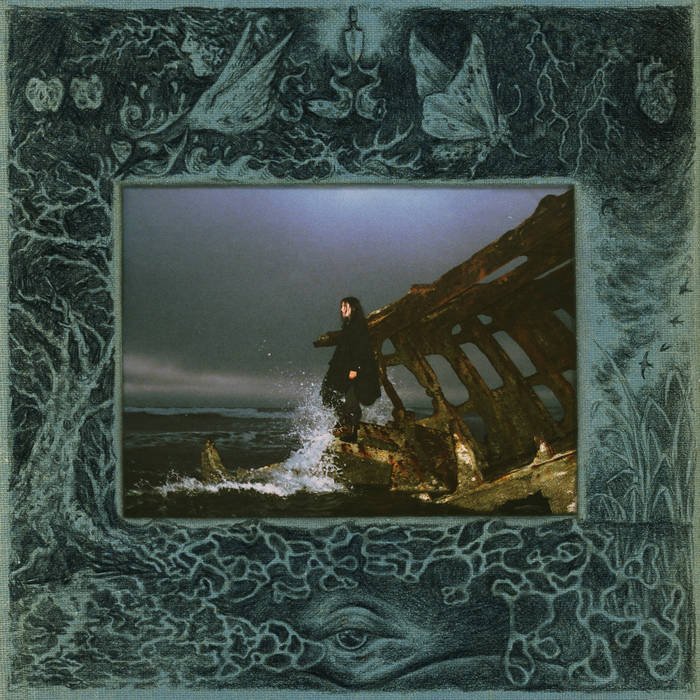
Image courtesy of Bandcamp
Listening to the pining lyrics of each song, the subtle yet powerful inclusion of earth metaphors grounds the record in a sense of comfort. “Dirt” relays the inability to leave what is familiar, with experiences always pulling one back to the “dirt I knew we’d always come back to.” “Dearly Missed,” the most emotionally charged track on the record, begins slow and steady as the electric guitar and heavy percussion slowly build throughout the nearly six minutes. Duckart’s vocals reach a level not yet heard on the record as he sings of a man who ultimately turns to his own end due to a tumultuous relationship: “He drove his car off of the river bridge / They never found him, and they haven’t since / He’s dearly missed.” The bridge goes quiet right before the euphoric outbreak of sporadic sonics and vocals.
“Junie” and “In Violet” slow the album's pace, navigating uncertainty and tumultuous relationships. “Geese,” the final track of Death in the Business of Whaling, heavily references Mary Oliver’s renowned 1986 poem “Wild Geese.” Ending the work with peaceful imagery in nature, after the wildly diverse range of emotions exuded from the rest of the record, makes the album feel complete — the calm after the storm.
Searows’ second studio album, Death in the Business of Whaling, is set to exceed expectations of Searows’ fans and new listeners alike. While keeping the singer’s identifiable ethereal vocals, this record adds a newfound energetic and euphoric production, emphasizing the emotional punch of Duckart’s lyrics. Radiating a hauntingly honest vulnerability, Death in the Business of Whaling is a record that has to be sat with and fully digested by ear in order to fully experience the emotionally wrought artistry of the work.
Rating: 9.5/10
Glowing Tracks: “Belly of the Whale,” “Dirt”