
Album Anniversary: Fifty Years Later, Stevie Wonder's ‘Songs in the Key of Life’ Still Speaks to America
Album Anniversary: Fifty Years Later, Stevie Wonder's ‘Songs in the Key of Life’ Still Speaks to America
Half a century after its release, Stevie Wonder's magnum opus remains a landmark of American music and its meditations on poverty, faith, and justice are as urgent now as they were in 1976.
Written by Noah Keany
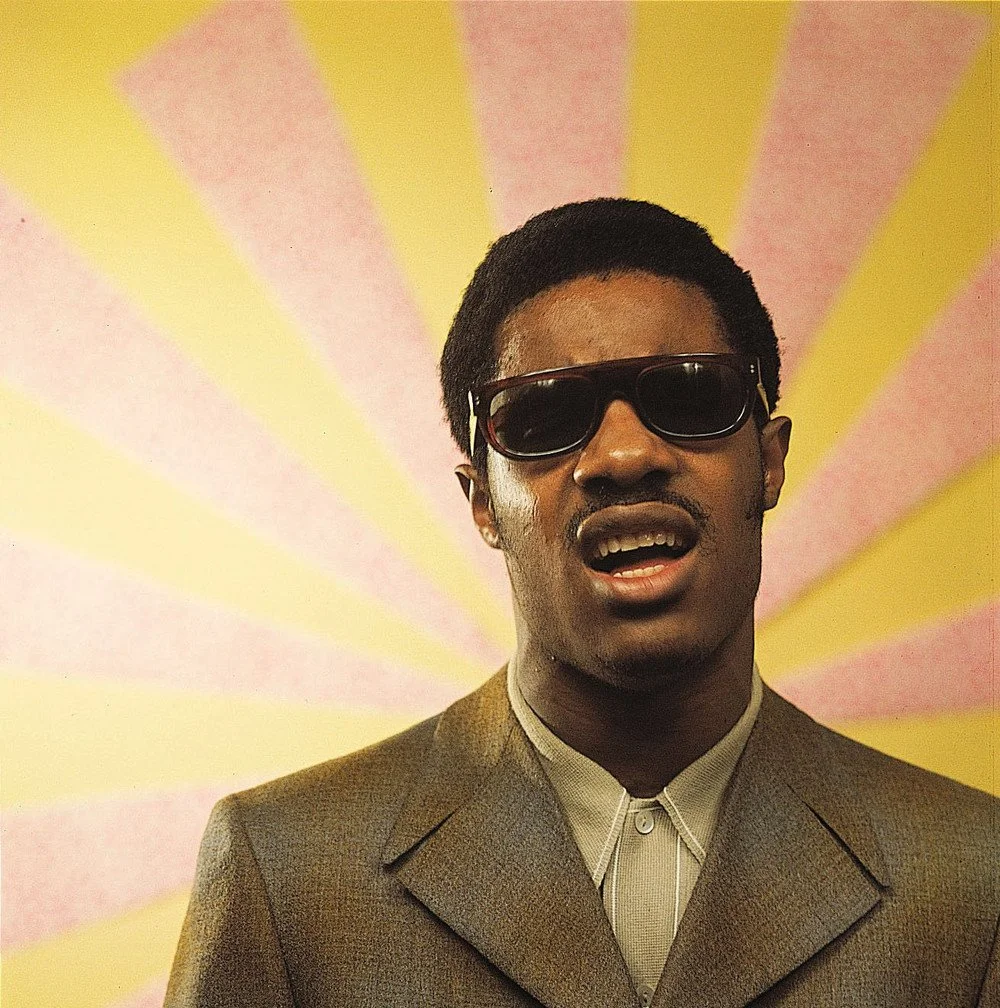
Photo courtesy of Motown Records
Content Warning: This article contains references to gun violence and death.
On Sep. 28, 1976, a blind African-American man named Stevland Morris would release his 18th studio album at the age of only 26. Adorned on the cover of this album lies rings of radiant oranges and yellows emanating from a focal, white-hot circle with Stevland's face affixed to its center. This circle evokes the radiating light of the sun, which provides the world we live in with the titular life that Stevland evokes throughout Songs In The Key of Life on “Summer Soft” and “Another Star,” where the light of the star exemplifies beauty and hope as an eternal force. The imagery also serves as a higher force that permeates through “Have A Talk With God” and the rest of this album, which Stevland looks toward as the source of a brighter future for the communities and people in “Village Ghetto Land” and “Pastime Paradise.”
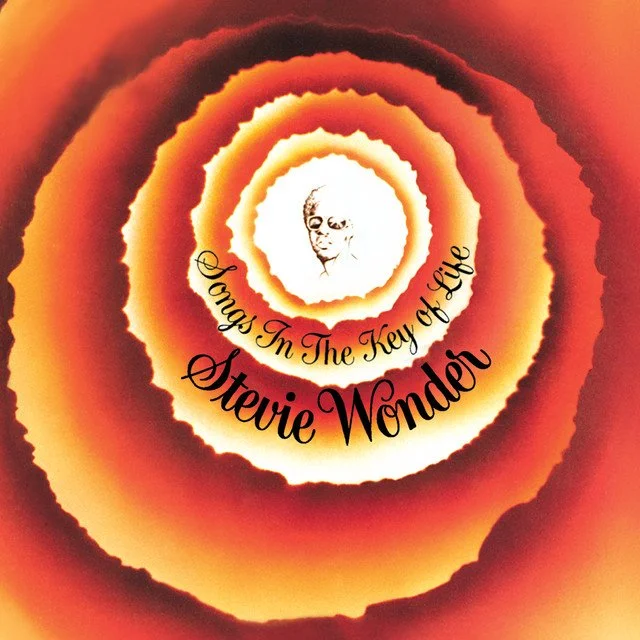
Image courtesy of Motown Records
In April 1974, Stevland Morris, stage name Stevie Wonder, stood in front of reporters in Los Angeles and announced he was moving to Ghana, pledging the profits of an upcoming tour to a nonprofit that worked with children in Africa. He had been signed to Motown since he was 11 years old, and by the mid 1970s he had become one of the label's most valuable artists. The idea that he might walk away from music entirely, at the height of a financial recession that was already hurting Motown's bottom line, alarmed label president Ewart Abner and chairman Berry Gordy, who moved quickly to keep him.
After tense negotiations with Gordy and Abner, Wonder secured a seven-album, seven-year contract worth a $13 million advance, full publishing control and a 20% royalty rate, terms so favorable that even an artist as dominant as Elton John had nothing comparable at the time. With his financial future locked down, Wonder shelved his plans to relocate and turned instead toward the most ambitious recording project of his career.
What came next was less a studio session than an obsession. Over roughly two and a half years, Wonder worked across studios on both coasts with collaborators including Herbie Hancock and Minnie Riperton, sometimes recording for 48 hours without stopping. Engineer John Fischbach later called it the most prolific stretch of Wonder's career, and estimated that Wonder cut over 200 songs during that window, many of which have never been released. Fellow engineer Gary Olazabal described Wonder's process as “frighteningly spontaneous,” where it was not unusual to receive an eleventh-hour phone call from Wonder “wanting to try something new.” Wonder's own explanation for the chaos was simple: "If my flow is goin', I keep on until I peak."
Despite the strenuous production and impromptu beginnings, Songs In The Key Of Life debuted at number one on the Billboard 200, the first American album ever to open at the top of the chart, and it went on to win the Grammy for Album of the Year in 1977, Wonder's third such win in four years. It has since been certified as a diamond album, and it remains a fixture near the top of nearly every list of the greatest albums ever made.
That staying power has as much to do with Wonder’s lyricism as with the grueling process behind it. "Village Ghetto Land" strips away any of the societal narratives around poverty, walking listeners street by street through hunger, crime, and government neglect dressed up in the formal language of a string quartet, a contrast that makes the song's indictment land harder than shouting ever could. "Pastime Paradise" builds a similar tension between the past and the future, layering choral voices over a driving rhythm to argue that a society fixated on nostalgia for a paradise that already failed people cannot build a better one going forward. Elsewhere, "Black Man" reframes American history as a shared inheritance built by people of every background, correcting a national memory that too often erases contributions from Black, Indigenous, Latine and Asian communities alike. Even the album's tenderest moments, "Isn't She Lovely" and "Knocks Me Off My Feet," carry that same worldview, in which joy and intimacy are treated as a form of resistance against the world Wonder spends the rest of the record critiquing.
To this day, Wonder recognizes that not much has changed for those suffering under those same domineering economic and societal pressures. In a 2013 interview reflecting on the album decades after its release, he pointed directly to "Village Ghetto Land," arguing the conditions it described- communities failed by a lack of housing and mental health care had only worsened. He tied that failure to the country's relationship with guns, arguing that a nation flooded with weapons could not simultaneously claim to value safety, and he cited recent mass shootings as evidence of the cost. Regarding "Pastime Paradise," he said the song is a call to stop looking backward and to build toward what he called "the future paradise" instead.
That sense of moral urgency was never incidental to Wonder's music. In a separate conversation with Oprah Winfrey, he admitted that if he could see, he might have become an activist in the mold of Malcolm X, someone willing to take radical stands for justice even at great personal risk. When asked about his hopes for a later album, he offered a line that doubles as a thesis for his entire catalog: the belief that “the country cannot be the United States until it is a united people.” That conviction, more than any single lyric, is the engine behind Songs in the Key of Life.
The album's reach outlives its era in more literal ways, too. Its grooves have become among the most sampled in popular music, threaded through Hip-Hop over five decades. Coolio built the somber backbone of 1995's "Gangsta's Paradise" from "Pastime Paradise," turning Wonder's warning about inequality into one of the decade's defining hits, and A Tribe Called Quest lifted the iconic spoken intro of "Sir Duke" for "Footprints." Erykah Badu wove pieces of "Ordinary Pain" into "Penitentiary Philosophy," and 50 Cent's "Ryder Music" replayed elements of "Love's in Need of Love Today," a song Jay-Z would also draw from directly on "Smile," a track dedicated to his mother.
Those samples are evidence that Wonder's language, musically and lyrically, became part of Hip-Hop's own vocabulary for grief, faith, and social critique. A genre built on sampling the past to speak to the present found in Songs in the Key of Life, a well it could return to again and again whether the year was 1995 or 2017. Fifty years after two and a half brutal years in the studio produced a record built on hope, anguish, and unfinished national business, artists and listeners alike are still finding their own reflection inside it, proof that the paradise Wonder asked America to build remains, even now, a work in progress fifty years later.