
Submarine: How Emotions are Learned through the Film’s Soundtrack
How the original score has become the language communicating emotions of first love, grief, and identity exploration.
Written by Jayda Carrejo
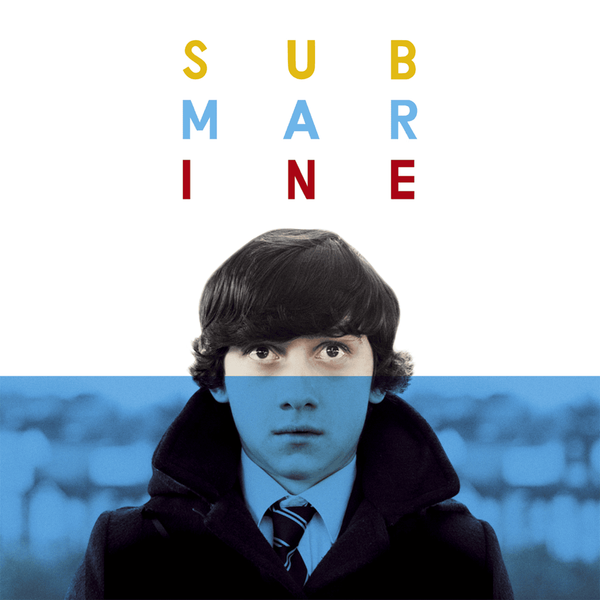
Image courtesy of Genius
Richard Ayoade’s 2010 directorial debut, “Submarine,” occupies a space entirely its own. It is an encapsulated masterpiece that navigates the turbulent waters of first love and self-discovery. Set against the gray, industrial backdrop of Swansea, Wales, the film follows Oliver Tate, a 15-year-old independent intellectual whose perception of reality is filtered through a heavy cinematic lens.
While the visuals pay a saturated, stylized homage to the French New Wave, complete with bold title cards and symmetrical framing, the film’s true heartbeat resides in its original soundtrack. Written and performed by Alex Turner, the lead singer of the Arctic Monkeys, the score does more than simply accompany the film; it acts as a primary narrative. Turner moved away from the high-octane indie rock of his band to articulate pure, complex emotions of struggle, love, and grief with a melodic precision that defines the film’s core meaning. With cohesive sounding instrumentals, hushed vocals, and guitar picking rather than intense strumming, Turner created an independent folk and almost chamber-pop tracklist.
The film opens with Oliver’s meticulous self-introduction. His voiceover accompanies the gentle, rolling acoustic fingerpicking of "Stuck on the Puzzle (Intro)." This track feels small, intimate, and purposefully isolated, mirroring the contained world of a teenager who views his own life as a masterpiece in progress. The distance between Oliver’s grandiose internal perspective and the awkward, damp reality of his adolescence elevates the track from a ballad to a whole body experience that buffers with different emotions.
Turner’s minimalist production provides a chamber for Oliver’s fragile ruminations. At this stage, the storyline is defined by the character’s desperate need to be perceived. Through the quietly strummed chords, the music reflects this encapsulated feeling of a boy living inside his own head, where the idea of love is initially a concept that has to be formulated and directed. The internal discovery that you see in Oliver starts here, which suggests he is waiting for his life to truly begin.
When Oliver meets the local high school bully, Jordana Bervan, a romance begins to bloom. "Hiding Tonight" provides a soft, swaying backdrop amidst flickering Super 8 montages of burning polaroids and walks along the pier. The track’s crooning vocals and inflected guitar suggest a precocious romanticism. It provokes feelings of timelessness and hopeless naivety through the lyrics “Tomorrow I’ll be quicker / I’ll stare into the strobe light flicker and afloat / I’ll stay.” It captures the invincibility of first love, when the world feels vast and wide. Even with physically confining limits, perhaps the cares and worries of the world are gone. Innocence surrounds every decision, even when values such as “No pets, No hand-holding, and no emotions (gay),” are introduced.
The music is a protective layer, shielding the duo from looming adulthood represented by Oliver’s parents. There is a specific kind of saturated shoegaze in the film's coloring — deep blues and stark reds — that matches the texture of Turner's vocals. As they loiter by the sea, the track “ Hiding Tonight” plays as Oliver’s fiddly and introspective self suggests the awkwardness of discovery. The cinematic lyrics, “I will have a game of the coconut shy / And win a prize even if its rigged, I won’t know when to stop / And you can leave off my lid / And I won’t even lose my fizz,” acts as a bridge between Oliver’s raw, unscripted emotions about his first genuine connection and what he knew and developed a sense for in a parental relationship.
As the film moves into its second act, the atmosphere shifts. Oliver’s interference in his parents’ lives, specifically his attempt to sabotage his mother’s potential affair with the eccentric Graham Purvis, becomes increasingly messy. The upbeat, driving rhythm of "Glass in the Park" plays over scenes of Oliver spying. Its jaunty tempo masks the underlying anxiety of a child trying to control variables beyond his reach. Between his parental figures, whose distance in marriage and connection prevails beyond their affection, and a girlfriend whose mother is sickly with cancer, the lyrics speak of fragility and transparency with Oliver’s own vulnerability. Turner sings, “And when you say that you need me tonight / I can't keep my feelings in disguise / The white part of my eyeballs illuminate.” The song’s structure feels like the ticking of an old grandfather clock, as the melodic background notes and subtle soft guitar riff reflect the frantic pace. Here, Turner's production highlights the struggle behind the realization that people are not characters, and you are not the director of a movie.
A sheer example of this is Oliver seemingly poisoning Jordana's dog to be more emotionally trusting in him and her life. After the breakdown of Jordana and Oliver’s relationship, pensive notes fill the air as Oliver attempts to reconcile with the debris of his actions, calling her home line repeatedly, making eye contact with Jordana from afar in school as she spins in circles with a new boy, the way they once did. In the background, the track, “It's Hard to Get Around The Wind,” plays, but does not offer easy answers. Instead, it acknowledges the persistent, uphill battle of growing up. The arrangement, just a guitar and vocals, mirrors Oliver’s stripped-away ego. He is no longer the director of his own world; he is simply a boy standing, finally present in his own life. The idea of longing for love prevails through this shift to a quieter sound, moving from a self-serving fantasy to remembrance of a shared, quiet endurance. Lyrics like “But as long as you still keep peppering the pill / You find a way to spit it out again / And even when you know the ways it's going to blow / It's hard to get around the wind” serve as a testimony to this silent commitment.
The film reaches its emotional lush in the final scene, as Jordana and Oliver meet surprisingly at the tides of the shore after Oliver was reflecting alone prior to seeing Jordana's bold red sweater. Oliver stands at the beach, with a tear in his eye, to meet his acquaintance with her new dog, his world feels as submerged as the title suggests. The acoustic intimacy of the earlier scenes gives way to a fuller, cinematic production. The last dialogue is shared when Oliver states, “Ask how deep the ocean is?”, when Jordana asks the question, Oliver responds, “I’m not going to say,” until she iterates, “I’m brokenhearted,” to which Oliver answers, “The Ocean is 6 miles deep.” Here, the storyline changes significantly; the film moves away from the playful intellectualism of the first half and sinks into a more visceral, emotional depth.
It is then, after eye contact is made and a moment of intimacy is shared, that the reverb-heavy piano of "Piledriver Waltz" takes center stage. The track is a masterpiece of melancholy. Its waltzing time signature mimics the dizzying, often circular nature of teenage heartbreak. As the lyrics imply, “I etched the face of a stopwatch on the back of a raindrop / And did a swap for the sand in an hourglass / I heard an unhappy ending, it sort of sounds like you leaving / I heard the piledriver waltz, it woke me up this morning.” Jordana influenced a powerful, wrenching, piledriver-like feeling in Oliver's heart, yet the definition of heartbreak is changed here through the simple portrayal, yet complex understanding of this last interaction between the two. Perhaps growth is implied, even after a connection's reframing that hurts so deeply.
The legacy of “Submarine” is tied to this opaque soundtrack, which exists parallel to the cloudiness of teenage years. It leaves audiences grasping for a melody to divert them from the reality of growing up. Popularized by its quirky aesthetic and sharp wit, “Submarine” remains unflinching in its depiction of awkwardness in the human heart. It is Turner's production and cinematic lyricism that deeply explore the realization that we are not the center of the universe, but perhaps for the first time we are truly seen. Through the lens of Turner's music, characterized by baroque pop elements and melodic instrumentals, the acoustics of string, and soft, gentle guitar weeps that allow for the path of adolescence, family dynamics, and first love to be displayed, the story of Oliver Tate becomes a universal anthem for anyone who has ever felt "submerged" by their own emotions, only to find that the way out is letting the real world begin.