Interview: Facing Fears with LIVINROOMPARTY
The genre-bending musician detailedly unveils her songwriting process and the struggles of breaking out in today’s social media-driven music scene while maintaining a positive outlook.
Written by Valeria Mota
Photos courtesy of LIVINROOMPARTY
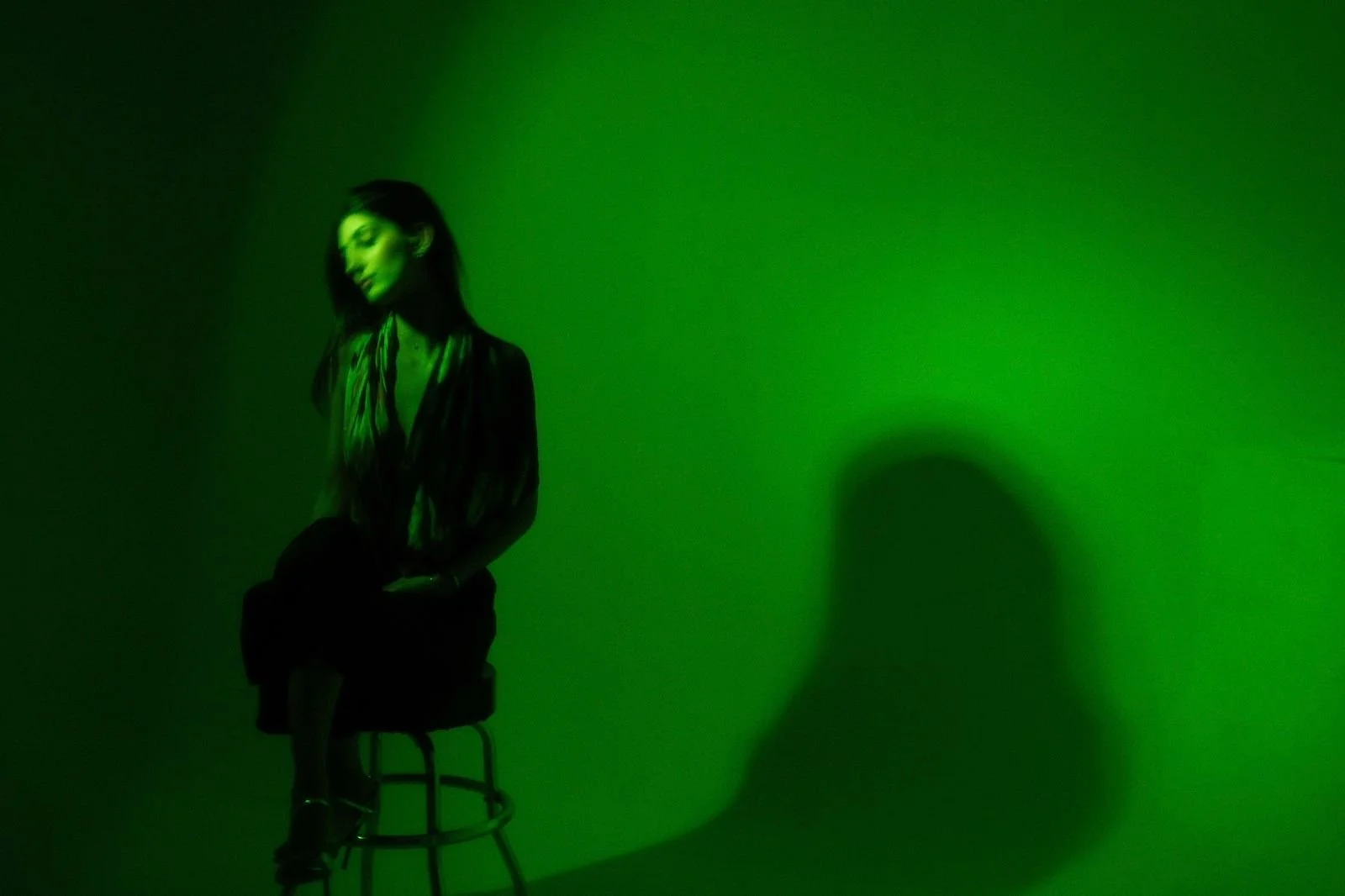
Eva Benitez, the mind behind LIVINROOMPARTY, has one goal in mind: to make you dance in your living room. The Monterrey-born, San Francisco-based producer and songwriter has released three dazzling, synth-soaked tracks that simultaneously relax and encourage. With a bright future brimming with potential ahead of her, Benitez sat down for an in-depth interview with Afterglow to openly share her perspectives on fear, social media, and divine intervention.
Afterglow: You were born in Monterrey, Mexico and now live in San Francisco as a San Francisco University (SFU) student. How did growing up in Monterrey influence your music? Did moving to San Francisco influence it further?
Benitez: Living in Monterrey obviously was what made me start making music, the person who helped me and taught me to produce was from there. But I had to psychologically prepare myself and consciously work on my fear of being perceived by others and being rejected. We all have soul wounds, and I think rejection has always been my biggest. So having to express what I have to express while being perceived by so many people — especially people from Monterrey, who tend to be super close-minded and only a few take a more artistic route — I would wake up with enormous anxiety every day. This was before releasing music, while I was learning how to produce and knew that I would eventually end up releasing songs. I had so much fear, I didn’t know fear could be so intense. No one really talks about fear, only general fears like spiders or the ocean or heights, but never the internal fear of doing what we actually want to do.
As soon as I got to San Francisco, [the fear] was gone. Being on my own in a city so far away, so liberal, so open and so nice, it took the fear away completely. Well, maybe not completely, but I’m not afraid of being perceived here. Making music in San Francisco helped me out so much because I met so many artists in my university. In Monterrey I would talk to people I knew could sing and I already kind of knew, but here I would go to the choir group uninvited and ask for their Instagrams. So I’ve met a lot of creative, artistic people from my school who make music who help me out in my projects and I don’t have to pay them — they do it for the game, for the experience.
Tell me a bit more about your journey as a producer. Where did the idea come from? Who taught you how to produce?
This is a great story. I always wanted to do something in the arts, and my entire life I’ve always loved movies, but I realized that making a movie is a hassle. I literally realized I don’t want to make a movie because it’s so much work. Movies weren’t it. So when I didn’t know what to do, I meditated with this one girl who’s clairvoyant and sees angels. She told me, “Your angels are always with you, ask them things, make them a wish.” So I got to my house, I said “Angels, how are you? I want you to present to me a Yoda, a musical production Yoda or mentor. Send them my way, I don’t want to have to look for them.” That was it. After that, I came to study in San Francisco, and during my first year at the dorms, there was a girl who lived next to me who made music. We became friends, and in October on my birthday was the first time I started writing songs.
I also realized that a common occurrence in my life was that I was attracted to people who sang, who were DJs, who played guitar or made music because I realized that at the end of the day that was what I wanted to do. I looked up to them because they did what I didn’t have the guts to do. So I came back to Monterrey at the end of freshman year and told my brother that I would love to produce music, and he told me he has a 35-year-old friend who produces music and that I should meet him. He gave me [the friend’s] Whatsapp, who told me I should download some stuff and then I sent him a track. He told me, “You have a lot of potential, Eva. I never do this, but I’ll teach you everything I know.” So my Yoda arrived, and for the whole summer I went [to him] four hours a day, four times a week to learn how to produce.
I’ve noticed that the last three songs you’ve put out don’t have a traditional verse-pre-hook-chorus structure. What’s your songwriting process like?
They do have a chorus! I normally skip the pre-chorus. “Looking for a Sign” has a very different structure, I didn’t follow a lot of structure there … they’re not really standardized, it’s not the typical formula I guess. But honestly, writing songs is what I most struggle with — between producing and writing, producing is so much easier for me than writing. Last semester, I took a songwriting course, but I still struggle a lot because like … I doubt a lot. I doubt a lot of what I write, but I’m working on that. One time, the same girl who sees angels told me, “You think that if a tree grows crooked, God will judge it? God loves all his creations, you should also love all your creations.” I like that a lot, so it helps me love what I write even if I don’t exactly like it.
Sometimes I like to write more deep stuff, I try to have a balance between deep and not deep, and the deep stuff is always from my own experiences. Like, “Looking for a Sign” talks about depression, and I wrote for my friend who was struggling a lot with it. It talks about suicidal thoughts, and it doesn’t tell you that directly, but it’s about wanting to keep living life even though it’s difficult. Other than that, [I write] stuff I like, like “Dancing in the Dark” literally talks about dancing when you’re at a party and you close your eyes and [you get] that feeling of “nothing matters, I want to be doing this my whole life.” That song also kind of talks about fighting for your dreams. They’re all perspectives I have … the next track that’s coming out talks about the fear I was talking about, the fear we all feel when we want to do stuff we’ve always wanted to do, and we’re going to do it with fear anyways, and also about the importance of everything we say and think. So it’s really a balance between personal stories and personal taste, things that I’m going through deep down and life perspectives that I want people to have as well, like thinking twice before you speak negatively about yourself; you’re never alone; take life easy.
Honestly, for writing, I don’t force myself so much to write unless I’m missing parts of a song, but what I like the most is random, like I suddenly come up with stuff. I have the perspective that David Bowie, Michael Jackson and a lot of people before and after the medieval era thought that music were messages from the divine, and sometimes I believe in that too, like sometimes it pops into your brain and I think that it can come from the beyond. I do think music is divinely guided.
Who are your biggest musical influences?
Here they go. MGMT, super big [influence]. Lorde, Beach House … Gorillaz … honestly, Billie Eilish. The album with “CHIHIRO” changed me a lot, I listened to “CHIHIRO” and I was like, “I want to do this.” Jan Blomqvist I love, Phantogram. Also Black Eyed Peace, those guys were crazy, like banger after banger … Billy Idol, I love that kind of rock … Passion Pit is huge for me as well … Lady Gaga, I love her. I think those are my biggest … oh, and also 070 Shake.
Right now, a lot of your songs are very synth-heavy. Have you thought about incorporating other instruments into your music, whether live or electronic?
Honestly, it’s always going to be synth-heavy. In terms of genre, I’d like to do a bunch, like pop, house, techno, everything within house like progressive house and techno house, dance pop, indie, alternative. Those are the genres [I like], but they’re all going to have synths. I honestly love synths, I recently bought a new one that I just plugged in yesterday. You don’t realize it in the songs because they’re low in volume, but I include electric guitar, there’s a lot of electric guitar which I like to incorporate, it’s something MGMT did a lot. I would love to include live drums, but recording those is a hassle. Plus, I don’t have drums and I don’t know how to play them, but I would like to include them.
You recorded vocals for your first single, “Looking for a Sign.” What was it like learning to sing for the track?
I only sing at the end, like, five seconds. I don’t sing the whole song, I’m not that good. I think it was the thing I was most nervous about, and even though I realized that though I didn’t sound that bad, at the end of the day they’re just people who do it better. It’s going to be really rare if I sing again in one of my songs, because they’re just people that can do it better than me. And the truth is I struggle a lot. I’m really good at matching the pitch when I’m listening to music, but when you’re recording a song you can’t match the pitch, there’s nothing to match … I got to steer away from singing. It’s not my thing.
You’ve worked with singers who aren’t based in San Francisco for songs like “Dancing in the Dark” and “My All.” How’s it been like working with other singers, especially when it comes to digital communication?
Honestly, I love it. I’ve literally made so many friendships, especially in San Francisco, doing this, because sometimes it’s people that I’ve never met before and I ask them to please come sing for me, so I’ve gained a lot of friendships from that. I don’t struggle with [recording vocals] but it’s definitely a hustle because sometimes the voice in my head doesn’t sound like the ten people I interviewed, so now how do I find a girl who sings like that? For the song I’m making now, I recorded nine people and only two made it on the track, and one of them only has like one sentence. It’s a lot, finding people for it, but I like it. I’m really focused on supporting women from all backgrounds … I definitely have a focus on collaborating with women.
What’s your favorite song you’ve made so far?
Honestly … the next one I’m putting out. I’m still working on it, there are some parts I don’t really love yet, but I love the song because it talks about fear and speaking positively to yourself. It talks about themes I’m super connected to, and I think people who persevere for their own goals and have to deal with fear, it’s not something they talk about at all.
How was the rollout for “Looking for a Sign” like for you?
Promoting [music] is something that is really difficult for me. Promoting your music is so hard, but I learned a lot about rollouts, like releasing it before for playlist pitching, the more people pre-save the song the better it does and the more the algorithm pushes it. I’ve been learning a lot about how to promote and I think I’m doing it better as I go on, but you do have to invest a lot of time and money into promotion.
What about recording the music video for the song?
For the “Looking for a Sign” video, it was super quick, super improvised. It was like, “let’s go to this club that has cool lighting and club vibes,” and my roommate came with me and we filmed it super quick. The “Dancing in the Dark” video, it was for a class, and we put so much effort into it. Like, storyboards, audience, it was a full production. It was so much work, and me and my friend Leah, who made the video with me, put in so much work into it and we became super close after that. Before that class she was a “Hey, how are you?” kind of friend and now I see her like, three times a week. She became a really close friend because we spent a lot of time together. It was super fun but it was a lot.
Social media presence, especially for promoting music, is very important right now. How do you use social media to get your music out there?
I’ve been working a lot on my branding and what I want LIVINROOMPARTY to represent. I’ve been trying to connect it a lot to self-improvement, connect it a lot with advice. That’s why I’ve been making videos on how to improve self-love, how to meditate, how to connect with something bigger, how to ask your angels for things, seeing everything as a blessing, not speaking to yourself negatively … It’s like self-improvement with good times, with dancing, that vibe of being young, free, and taking care of yourself mentally and spiritually. And obviously, DJ sets, booking DJ gigs, and helping people. My goal has always been helping people, either with the music’s messages or with music that makes you happy and gets you dancing.
What would you say is the biggest obstacle for you as an artist right now?
Promoting. I can make time for it, I can fight the mental obstacles, I can do all that and keep going to make music and finish it, but promoting it is the hardest thing. Like blowing up on social media, it’s the hardest thing. People’s attention spans are so small. For someone to watch your TikTok, go to Spotify, and listen to a whole song, it’s a lot, so I think that’s my biggest obstacle. I know that the first five seconds [of a video] are super important, and that it has to be like an experience or something people can relate to, but you just have to keep on doing it until it sticks, have consistency.
What’s next for LIVINROOMPARTY?
Right now, I’m working on five tracks. Never in my life have I worked on so many tracks at once. It’s very cool because I have one song that’s techno house, two songs that are like dance pop, like Dua Lipa vibes, and one of them is a remix of a song from Leah that I’m making. We also have another one that’s like dance rock called “Cornerstore,” the one about fear, and another that’s like Daft Punk, so I’ve been working on my shit. One of them is going to be a single, maybe two of them would be singles … if I’m going to release an album I want to have released like, ten [songs]. And if I’m going to be releasing an album you have to promote the hell out of it and that’s just too much, so first I want to focus on releasing the songs. So I think it’s going to be releasing a good eight singles and then work on the album. Also, merch, I want to make merch. I don’t want to be like, just a hoodie with the album cover on it, I want it to be like it’s own brand, but for that I have to graduate and it’s super in the future.
You can follow LIVINROOMPARTY on Instagram and TikTok and stream her music on Spotify and Apple Music.
This interview has been minimally edited for clarity and length.