
My Afterglow Moment: How Johnny Cash’s “‘Cause I Love You” Has Kept the Tie that Binds My Mother to Me
My mother, Patricia Yost, was a woman full of spirit. Her love for music, particularly Johnny Cash, is one way I have maintained a bond with her after she passed in the summer of 2025.
Written by Rachel Yost
Photos by Rachel Yost
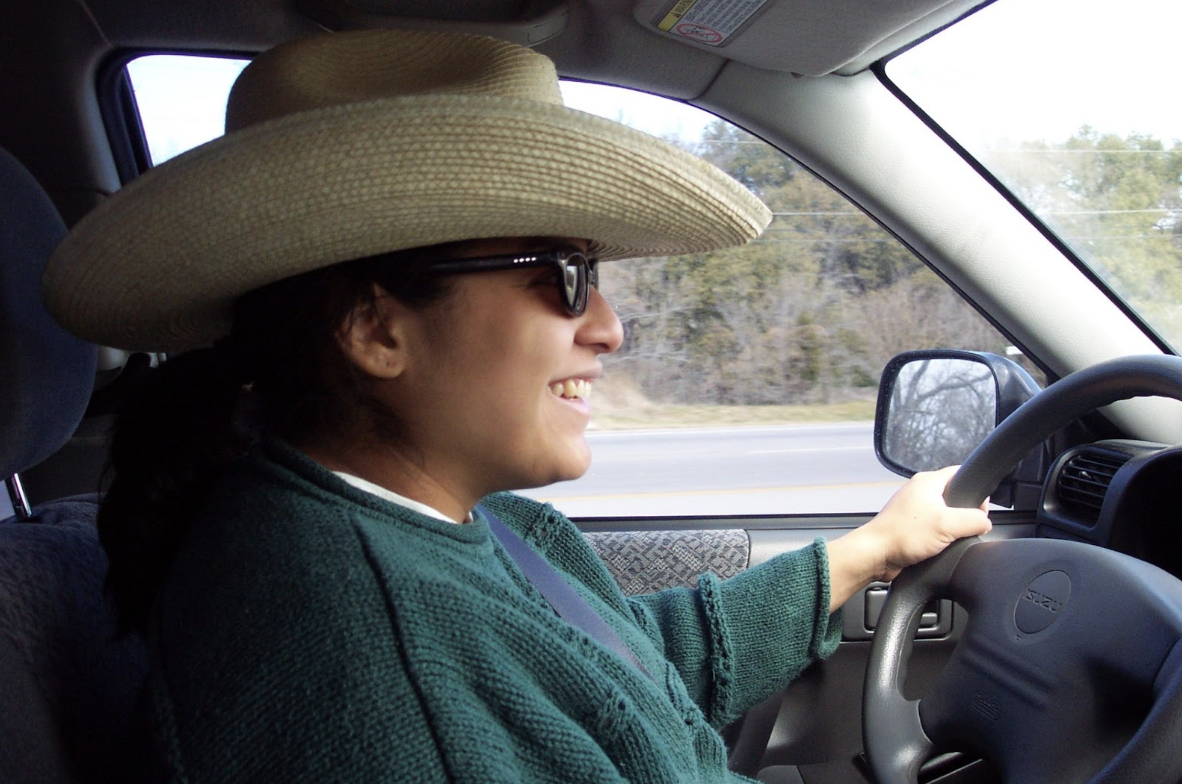
My mom was born on the luckiest day of the year: St. Patrick's day. On the day of her birth, the nurse handed her to my grandmother and said, “Here is your daughter, Patricia,” which is a name completely different, yet much more fitting, than the name Cindy, which is what my grandparents planned. Luck was embedded into her before she even had a chance to realize it. Despite this, never once did my mother rely on luck to guide her to success. She grew up poor and with the expectation to work tirelessly for a prosperous future. And work tirelessly she did. By the time I came along, my mother’s remarkable intelligence and work ethic had achieved her a paid-off home in central Austin, a family, whom she cared for greatly, and a distinguished position as a tax professional at Whole Foods Market. Luck granted none of this. She quite literally worked up until the day she died.
In many ways, her legacy is shaped by this ever-present drive to work. But this is not, and shall never be, the whole picture of her memory. One of my mother’s many loves in life was music. She constantly filled our home with everything from mariachi to old country, and bedtime was no exception to this. The song “‘Cause I Love You” by Johnny Cash was one of her most utilized lullaby renditions, and I have memories of being as young as three and her lulling me to sleep with this song. Her affinity with this track was fervent; in fact, I can still hear her voice echoing the lyrics every time I listen to it now. The way she sang each word with particular intention and appreciation for the song left such an impression on me; it was as if she wrote the lyrics, and was singing them to me and only me.
There is nothing extravagant about this track. Soft strumming of the acoustic guitar combines with Cash’s groveling, tender vocals to create a simple masterpiece. The endearingly consistent rhythm of the guitar provides a stage for the lyrics to shine on. Tonally deep plucking is interspersed among the strummed whisper of Cash’s guitar, shaping a nostalgically satisfying instrumental melody reminiscent of a lullaby itself. Cash goes on to sing expressions of undying love and willing sacrifice in a manner that subtracts any dramatization. While the promises he makes through these lyrics, such as “If we live in a cottage / you will feel like it’s a castle,” are lofty and unverifiable, his voice takes such an authentic tone that convinces the listener to believe him. The only explanation for Cash committing these acts is love, and through this one minute and forty-five second track, he instantly makes the listener feel personally comforted by his adoring words.
My mother was not a religious person, but she was a firm believer in sustained connection after death. The first weeks after she passed, my sister and I had a shared feeling that she was not actually gone. During this strange and discomforting period, one of my mom’s common utterances kept running through my mind. When she knew we’d be separated for more than a few days, she would always say “We’ll be back together soon”. Interestingly, this phrase of hers is quite similar to a lyric in “‘Cause I Love You.” When Cash sings “If we’re ever parted / I will keep the tie that binds us,” he reminds me of my mom’s virtuous phrase, and I choose to believe that this song is her way of saying a cheeky hello from beyond the afterlife. I took a trip to Colorado two months after the passing of my mom, and it was during this trip that the connection to this song became even more overt. For example, one of the promises Cash sings is “I’ll be there to cheer you / till the sun comes shining through,” and during one of our many bike rides, I posed for a photo in which a distinct ray of sun shines right on to me. This was completely unintentional, and I only realized it when viewing the photo after the fact.
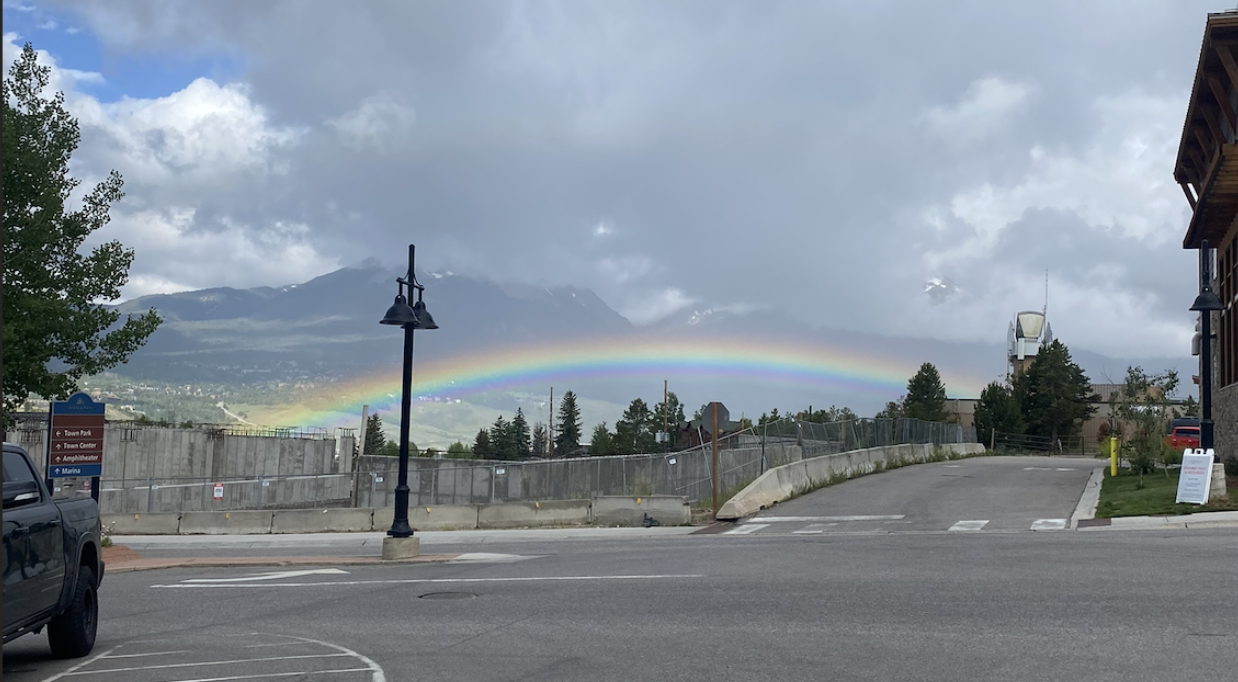
Another particularly relevant lyric of the song is “And the first time there’s a rainbow / I’ll bring you a pot of gold.” In the literal sense, this line connects to the unusual frequency with which I saw rainbows during this same Colorado trip. They were vibrant and demanding of attention; it was as if my mom ensured their notability so I would by no means miss her message. In the interpretable sense, the implications of good luck intertwined in this lyric were also not amiss to my attentive mother. Though she did not rely on luck during her life, she has found ways to gift it now that her life is over. For example, while hiking during this Colorado trip, I only barely avoided stepping on a poisonous snake, purely a strike of good luck. I also luckily avoided being swiped on the head by a hawk, which was actually one of my mom’s favorite animals. I took that as her way of reminding me that no matter what, she is always going to be watching me like a hawk. Some may view this as threatening; I see it as a display of motherly protection. This luck continues to show itself impishly in the present day as well. Never before was this the case, but after my mom’s passing, I have had consistently good luck finding parking spots. While this next example is not necessarily luck, one day she spoke to me through the clouds by forming a distinct four leaf clover in the West Campus sky. In my mind, that could only have been a sign from her.
The sorrow of losing someone can never be amended by any one thing. While I do find comfort in taking these signs as means for my mom to communicate with me, sooner or later the effects do fade. These moments of connection provide a brief second of relief, but I have found that music can also provide more sustained methods for coping. Hearing voices like Robert Earl Keen, Waylon Jennings, and of course, Johnny Cash, ignites my brain to remember my mom in her brightest occasions of joy. Remembering how she danced, laughed, and loved with all of this music guiding her through life inspires me to try and find happiness in grief. I have no idea what happens after death, but in moments of intense remorse, I have to remember that there is a chance for my mom and me to meet again. Coincidentally, this is the title of another Johnny Cash song. “We’ll Meet Again” is certainly not a promise, but it is a possibility, and that is more than enough to give me hope.