
Playlist: Music to the Theme of Blanche DuBois
A playlist encompassing the DuBoisian feelings of grief and loss of innocence.
Written by Zachary Bolash
Illustrated by Mayuri Srivaths
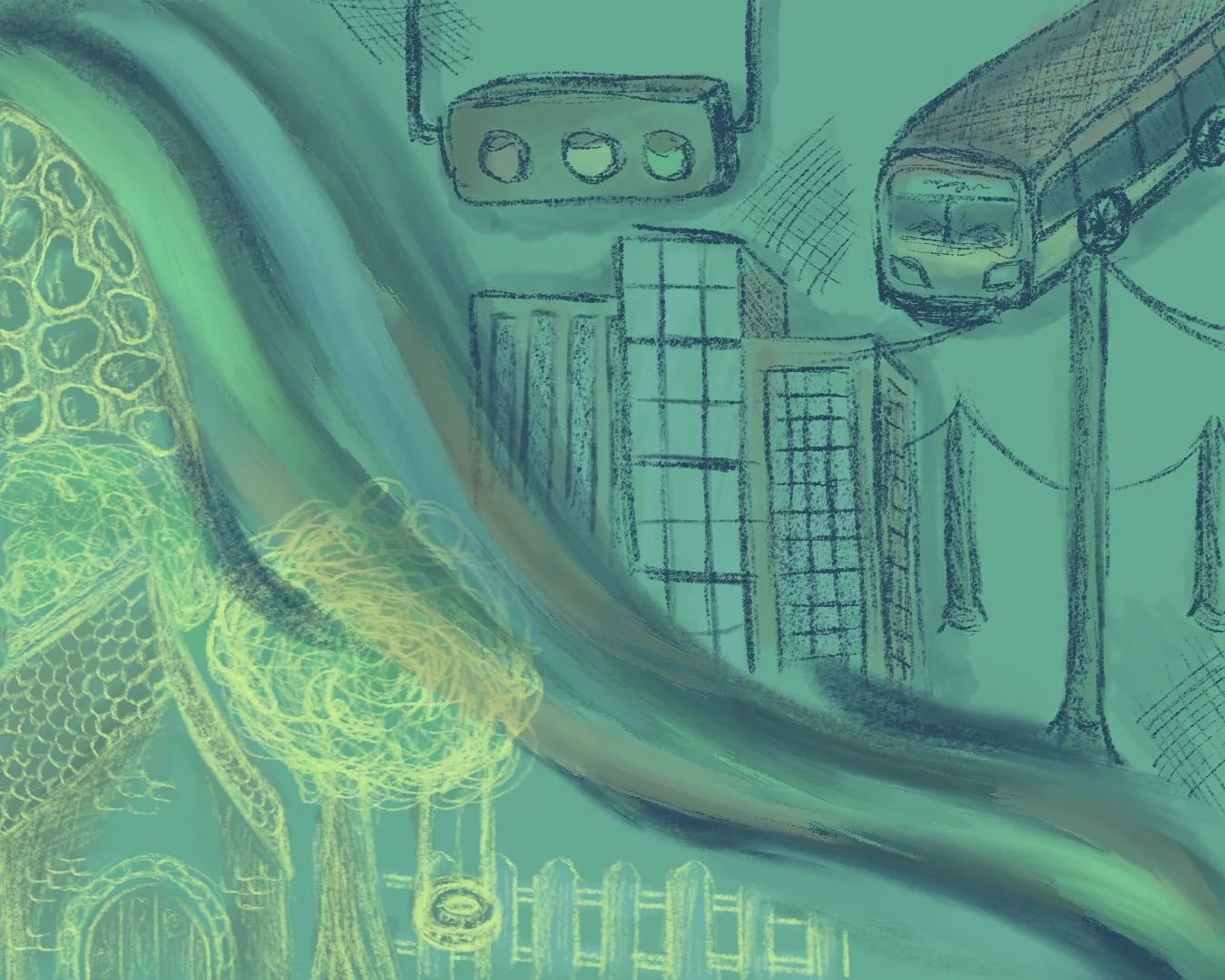
In the American literary canon, histrionic Blanche DuBois symbolizes innocence lost and the grief that accompanies it. The 1947 Tennessee Williams screenplay, “A Streetcar Named Desire”, documents the doe-eyed DuBois’ move to New Orleans and her mental breakdown, precipitated by her sister’s callous boyfriend, Stanley Kowalski. Despite its 1940s release date, the story of “A Streetcar Named Desire” maintains relevancy in the modern era. Adulthood is the transition from the safe, insulated environments to raw, unbridled urban landscapes. While not all adults today may not be migrating from stately rural villages to live with their sister’s rugged boyfriend, one can still draw contemporary parallels to Blanche's predicament.
The transition to adulthood is one that requires “rubbing” salt into one's wound, or reckoning with its often melancholy and disappointing conditions. One’s coming of age can be marked by the acutest of heartbreaks or the occasional cruelty of the workplace, resulting in a grief caused by the realization that childhood’s fantastical facade of the world isn’t real. Music can serve as a mouthpiece for this transition through its potential for ephemeral portrayals of innocence and its occasional dark, dreary character. Sometimes, music can capture the exact nexus point from childhood to the unvarnished “real world.”
“Frou-Frou Foxes in Midsummer Fires” by Cocteau is an example of such. The song’s looming and intense orchestral beginning, followed by a climactic chorus, captures the feeling of disillusionment, akin to running blearily-eyed through an open field or watching a thunderstorm trounce one’s backyard garden. Moreover, “The Funeral Party” by The Cure seems set on a sonic downward curve, with consistently falling synth melodies encapsulating the slow-burning, often vertiginous feeling of growing up.
This playlist aims to encapsulate these feelings of innocence, the fall from grace, and all the emotions in between, much like the dramatic journey experienced by our unlikely protagonist, Blanche DuBois.