
The Problematic Impact of Eastern Influence on Psychedelic Music and Counterculture
The 1960s countercultural movement was notable for its foundational place in music history, passionate fixation with psychedelic drugs, and, more problematically, cultural appropriation.
Written by Kaileen Rooks
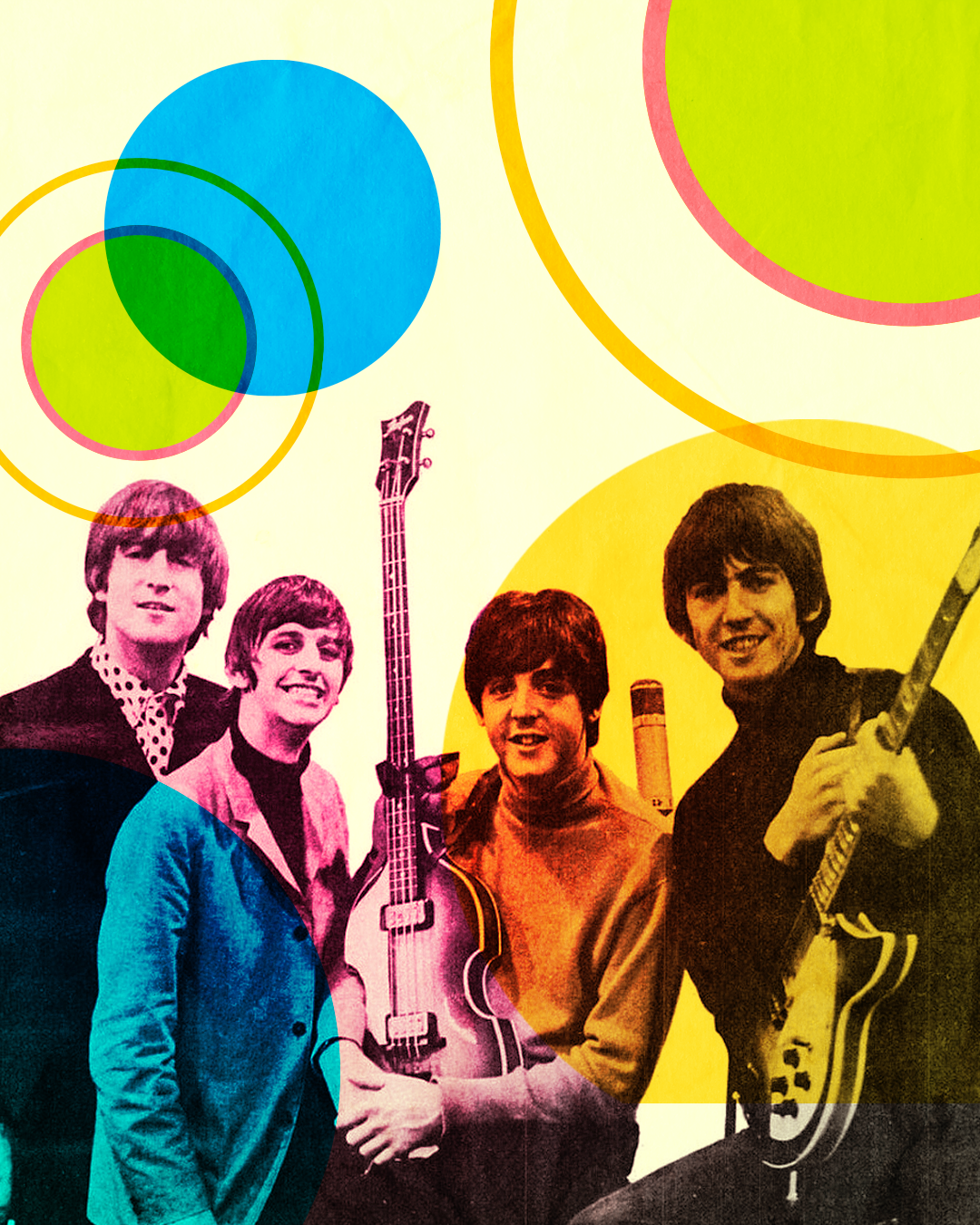
Illustrated by Ariel Gallegos
The brahmavihārā is an old Vedic canon, which became defined and actualized within the tradition of Buddhism. Brahmavihārā refers to four virtues of Buddhist practice, as well as the meditation practices associated with achieving them. Upekkhā, one of these four virtues or “immeasurables,” roughly translates to equanimity. The virtue of equanimity focuses on stability of mind in the face of all troubles, emotions, or fluctuations of life. By the time The Beatles released their later canonized album, Let It Be, in 1970, the “Summer of Love” and counterculture era was dead and buried. Nonetheless, the titular track on the album had a subtle discoloration that defied the new, retracted standards of the 1970s, one that painted a picture eerily similar to an era of enlightenment, free love, and wild, uninhibited passion.
The song itself might have referenced Christian imagery, but the underlying message harkened back to the Beatles 1960s exploration with Eastern philosophy, referencing the concept of equanimity with its repeated declarations to “let it be.” It seemed that the lasting effects of the hippie movement and the Eastern influences that came with it remained, lurking in the cultural framework and the music itself.
The countercultural movement of the 1960s was distinctly American in its origins, but with it came a resounding cultural influence that was overwhelmingly reliant on the tenets of Buddhism and Hinduism. Of course, in true American fashion, this cultural influence was sparked primarily by drug use. Psychedelic drugs — LSD, Psychosobilin mushrooms, and the like — were at the heart of hippie culture and countercultural art at the time. Psychedelics were heavily associated with tenets of Eastern philosophy and religions. Ideas of consciousness expansion, enlightenment, and interconnectedness, were prominent in the cultural landscape and drug use of the time.
Of course, drugs were not the only factor (despite what whacked-out hippies of the modern day might have you believe), there was also a distinct connection between the pillars of Eastern philosophy and the political movements of the time. Rejection of materialism and the concept of boundless compassion aligned with the subversive counterculture that opposed war, capitalism, and the establishment. Similarly, countercultural musicians increasingly incorporated Eastern influences into their musical style, especially the implementation of the sitar and famed sitar player Ravi Shankar. Additionally, the incorporation of Indian classical music techniques would later give rise to the raga rock genre, which finds its origins in the psychedelic music of the ‘60s.
The most popular psychedelic music of the ‘60s separated between the British and the Americans. Despite the origins of counterculture in San Francisco, The British put their own decided twist on the music, as the redcoats are wont to do. While the American countercultural ethos was decidedly political in every way, the British wave focused especially on culture, maintaining a rejection of materialism but straying mostly away from concrete political opinions, instead opting for an abstract, philosophical perspective.
Most notable was The Beatles foray into psychedelia, which served as a cementing force in the British wave of counterculture, particularly in regard to Eastern inspiration. In 1968, The Beatles took a well-publicized trip to India to train in Transcendental Meditation, a practice that purports higher expansion of consciousness, health benefits, and enhanced creativity. During this trip, Mahesh Yog guided the band, who would later guide American band The Beach Boys down their path to enlightenment.
During this trip, The Beatles were prolific, writing songs like “Tomorrow Never Knows,” which uses direct quotes from the Tibetan Book of the Dead, a Tibetan Buddhist text covering the notions of death and rebirth. The inspiration for this influence came from Lennon’s fascination with LSD and so-called “consciousness-expanding drugs,” specifically from the 1964 book “The Psychedelic Experience” by Timothy Leary, Ralph Metzner and Richard Alpert. The authors employed the Tibetan Book of The Dead to intertwine the notions of Eastern religion with the reported effects of psychedelic drugs, namely ego death. “Lay down all thoughts, surrender to the void,” Lennon croons, softly leading the listener down a path of depersonalization and expanded consciousness reminiscent of a life-altering trip on LSD.
On the American side, The Grateful Dead was establishing its own connection to the tenets of Buddhism and Hinduism through their long, winding improvisational style. Their dedicated fanbase known as “Deadheads” have often referred to the band’s shows as a form of “shamanism,” a spiritual practice relating to a religious leader healing them by altering their consciousness. Jerry Garcia, co-founder and lead guitarist for The Grateful Dead, was deeply involved in Hinduism, to the point that his ashes were scattered in the sacred Ganges river when he passed.
The Grateful Dead’s lyricism echoed the band members’ personal interests in Eastern philosophy, particularly in “Eyes of the World,” off their 1973 album, Wake of the Flood. “Wake up to find you are the eyes of the world,” Garcia warbles, the lyrics stemming from a translation of prolific Tibetan Buddhist writer and scholar Longchepa’s guide to the tantra. Powered by Bob Weir’s plucky, jazzy Fender Stratocaster and Bill Kreutzmann’s samba-inspired drumming, the track is bright, upbeat, and somewhat reminiscent of the Beach Boys’ Pet Sounds in its sunshiney sound and spiritual themes.
Speaking of Pet Sounds, the Beach Boys predated The Grateful Dead in its involvement with Eastern philosophy. Mike Love, lyricist and vocalist for the band, also studied Transcendental Meditation. The track, “Transcendental Meditation” represents his affinity for this practice rather literally in the final track from the band’s 1968 album, Friends. Brassy, psychedelic, and considerably jarring compared to the rest of the mellow album, the lyrics are literal, straightforward, and strangely unspecific for such a complex practice. A track mostly enjoyable for its clear jazz influence and energetic backing track, it almost feels mocking to the practice in its flippancy. Arguably, this track is something to be expected from what feels like an obligatory 1960’s inclusion of spirituality on an album that is otherwise friendly and palatable. In addition to their lyrical expression, the band members often touted influences of “Universal Consciousness,” with a special focus on “doing good to others,” as they stated in a 1967 interview with Rave magazine. Ironic, considering Mike Love’s very public friendship with Donald Trump.
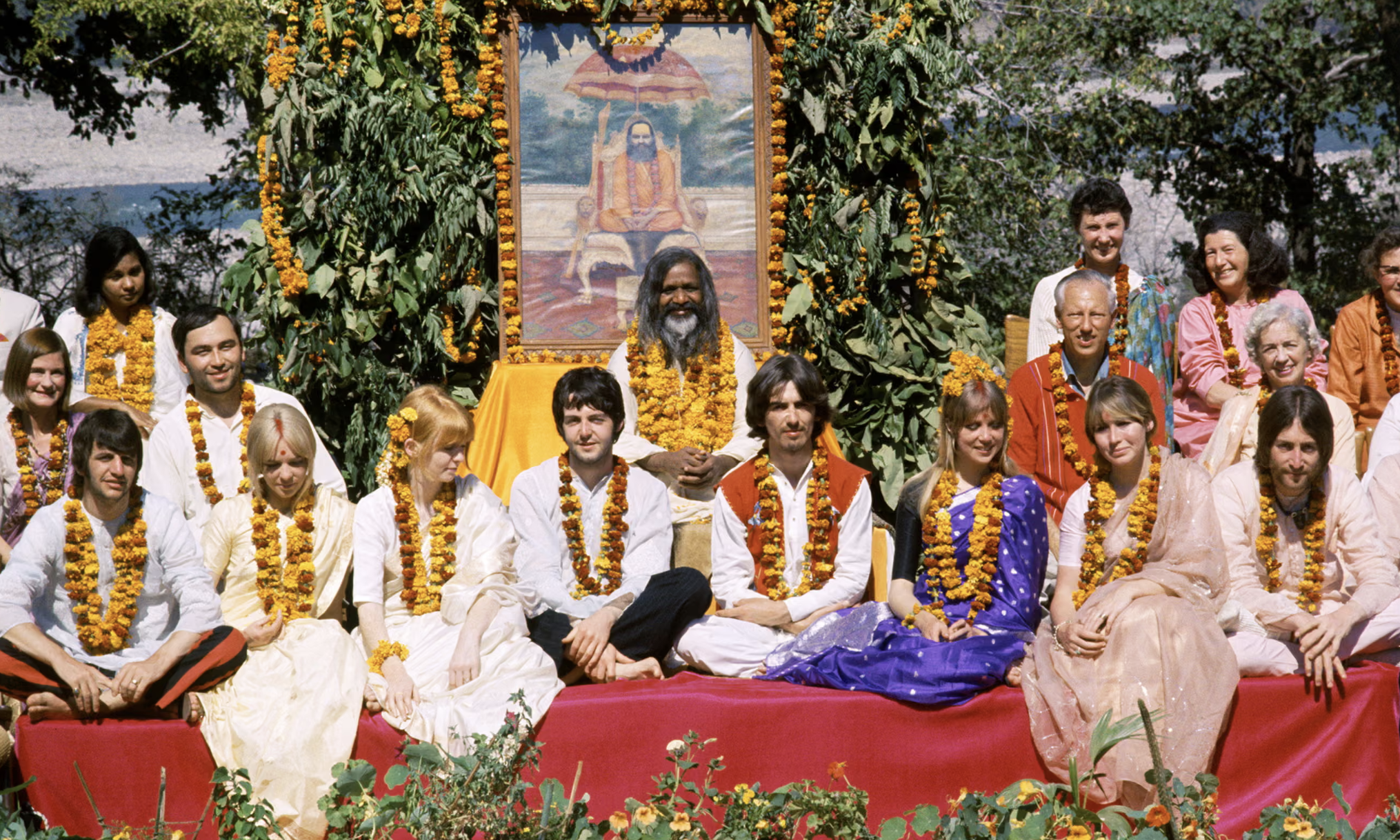
Photo courtesy of Paul Saltzman
While we’re on the subject of not practicing what you preach, it’s important to acknowledge that the authenticity, or rather, good intentions (or, if you will, vibrations) of the 1960s major bands’ Eastern philosophical obsession, is questionable. Despite the dreamy and high-minded pursuits of the suddenly spiritually-inclined musicians of the time, the question of the role of Orientalism in this counter-culture remains seared into the modern politically-conscious mind.
The giants of this musical era, throughout the ‘60s, became possessed by the tenets of Hinduism and Buddhism, infatuated by their notions of rejection of the materialistic structures of modern society, alternative ways of living, such as prioritizing mindfulness, exploration of the soul, and unconditional love. Practices like yoga and meditation were popularized in the West, primarily through the influence of these musical “converts,” but this preoccupation was disingenuous at best, harmful and offensive at worst.
Orientalism, first coined by Palestinian American scholar Edward Said, argues that Western scholarship and adoption of features of the Eastern (primarily Asiatic) world pushes a sense of “otherness” onto the cultural characteristics of these places and people, one that is rooted in Western colonial thought. While Said was originally referring to the Islamic world, the term has been expanded to include the Western conception of India and East Asia, the areas most predominantly discussed during this particular era of music.
The problem lies in the tendency of the majority white artists of this time to treat Eastern philosophy as a monolith, picking and choosing what they like that will facilitate their so-called “artistic journey,” and abandoning the rest. Moreover, their willingness to treat Indian and East Asian philosophes with a level of mystical wonderment contributed to the notion that India and East Asia were otherworldly, magical places where divine connection could be sourced out, rather than complex places with nuanced cultural practices and beliefs that cannot be simply picked up and thrown out as soon as it gets you a chart-topping record.
Finally, the bohemian, flower-power, hippie commodification of Eastern fashion, philosophy, and culture was entirely bastardized by the Western mania for drugs. Despite the fact that Eastern scholars and artists of the time abhorred their perceived association with psychedelics, Westerners had already decided that Eastern culture was their perfect getaway from the stale, monotonous drone of Western bourgeois life.
This fascination, or rather perversion, persists to this day. Any time you see a white girl with dreads worshiping a Buddha statue on the balcony of her Austin high-rise, or a random man-bun-clad man walking down the street with a Hindu god caricature tattooed on his overly-steroided arm, you can thank this time period, and the Western musical stars’ misguided passions.