
My Afterglow Moment: Embracing “The Uncool” — Music, Journalism, and My Dad
When my dad and I decided to read “The Uncool” by Cameron Crowe at the same time, it turned into more than a shared book — it became a means to revisit the way music shaped our relationship. Crowe’s early music journalism, which later inspired “Almost Famous,” helped me understand how the stories behind the songs can connect families as deeply as the music itself.
Written by Caroline McConnico
Illustrated by Winifred Violette Leydon
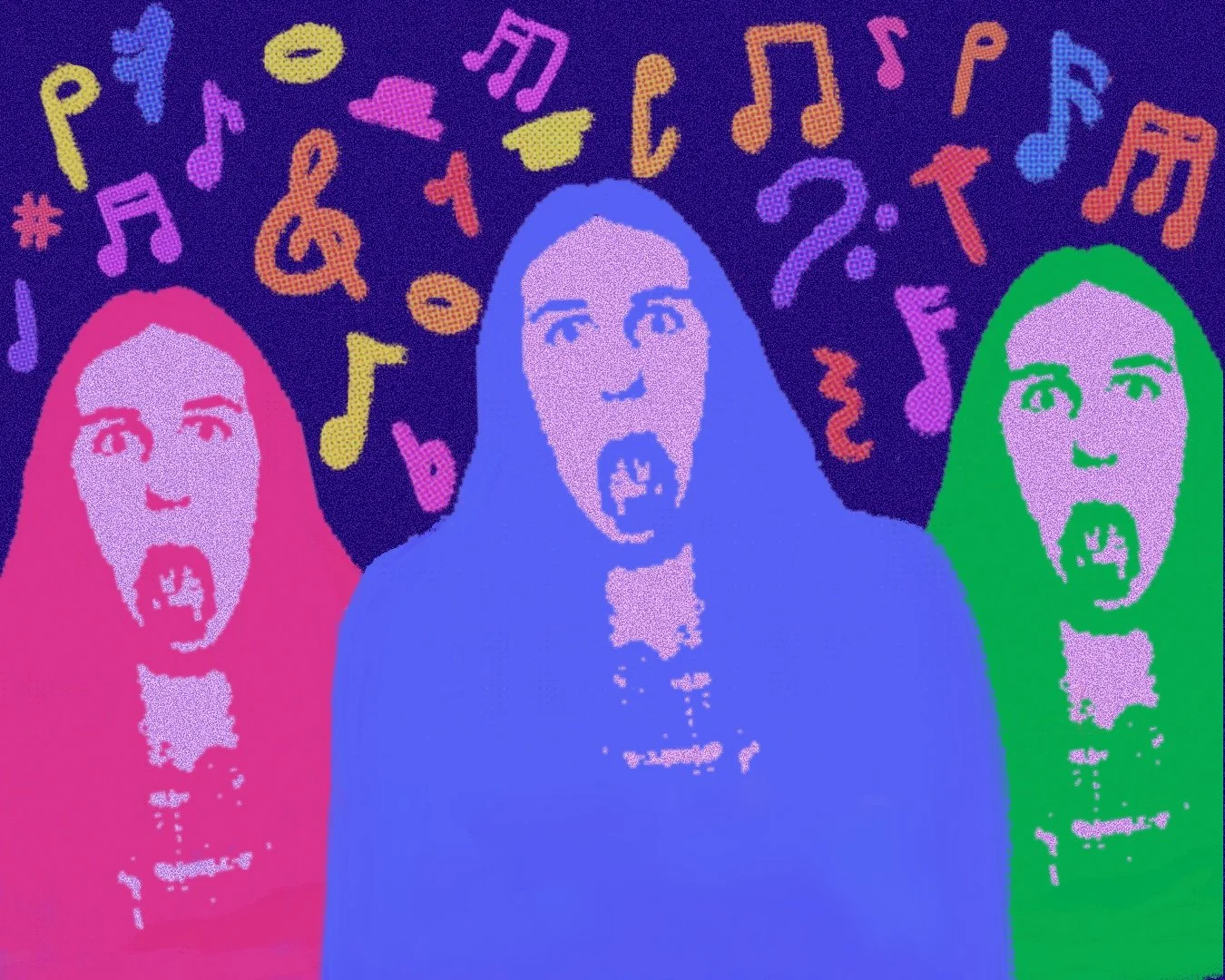
Sometimes when I am listening to music, everything else seems to dissipate. My eyes close and nothing around me seems real, like the song was made only for me. This experience isn’t original. But when I was younger, I believed that feeling was rare and magical, something only a select few people understood.
These select people who, when asked what they love about music, would answer the way Russell Hammond does in “Almost Famous”: “To begin with… everything.” For years, that line felt less like dialogue and more like a personal manifesto. It explained the feeling I could never quite articulate.
What I didn’t understand at age ten was that Russell’s words were really Cameron Crowe’s.
Before “Almost Famous” became the movie that made me want to become its bright-eyed protagonist William Miller, Crowe had already lived that life as a teenage music journalist trailing bands across the country. Those early years, awkward, obsessive, and wide-eyed, live inside “The Uncool,” Crowe’s sprawling collection of interviews and writing from his time at Rolling Stone.
When I first opened “The Uncool,” though, it wasn’t just Crowe’s voice I heard. It was my dad’s.
Music has often been a way for my dad and I to bond beyond our familial roles. My dad is the person who has introduced me to everything I love about music. My lullabies consisted of Bob Marley’s “Redemption Song” and The Beatles’ White Album. The Rolling Stones provided me with lessons in patience and perspective with “You Can’t Always Get What You Want,” while Grateful Dead’s “Monkey and the Engineer” painted vivid stories on my baby blue walls. I owe my connection with music to my father and his fearless commitment to its everchanging landscape. He taught me to love artists fearlessly, following them in their different stages of music-making.
“Almost Famous” was his gift to me, another reminder of the power of music. But the older I’ve gotten, the more I realize the movie isn’t just a coming-of-age story. It is a love letter to the kind of music journalism that once defined an era.
This past Christmas, my dad and I both received copies of “The Uncool,” and decided to read it at the same time. This sparked many lively telephone conversations about the inner workings of Crowe’s memoir. The book preserves the “Almost Famous” world off screen and reads like a time capsule of rock’s most electric moments. Filled with candid interviews and wild adventures, Crowe’s book captures his time as a music critic when he was barely older than the bands he was writing about. The rock ‘n’ roll fantasy bandaid is ripped off as Crowe describes the sometimes unpleasant truths of some of the most notorious rock stars. Artists speak candidly, sometimes awkwardly, and sometimes brilliantly. They speak in the way people only do when they’re young and convinced the future belongs to them.
Reading it felt strangely familiar.
The artists Crowe interviewed were the same ones my dad had spent years playing in the car, the same voices that had filled my childhood living room. Suddenly the mythology of rock music isn’t just something we listened to together. It is something I can read about, study, and imagine myself inside.
Each chapter of the book documents a different face-to-face experience with artists Crowe had spent his life idolizing; Backstage with The Eagles, Mexican food with Kris Kristofferson, jetsetting with Led Zeppelin. Among his most pivotal interviews includes his stint accompanying The Allman Brothers on tour. Depicted as the fictional band Stillwater in “Almost Famous,” The Allman Brothers made a man out of a 16-year-old Crowe. The tour hysteria features a grieving and drugged out Gregg Allman, reeling from his brother Duane’s death. After a sincere and unapologetic interview with Crowe, Allman snatches the tapes, claiming Crowe is a government spy and that the recordings are to be used to expose the band.
Experiences like touring with The Allman Brothers make up Crowe’s life as a music critic. Some stories are harsh, exposing the underlying brutality of “rockstarism,” inflating egos and sustaining substance abuse, while others shine a brighter light on what makes all music lovers tick: the sounds, the smells, the feeling.
For example, Crowe spends a considerable amount of time with David Bowie as he develops his “Thin White Duke” character. These chapters can be seriously disturbing, as Crowe describes Bowie’s unorthodox living including peeing in jars, writing demonic symbols on the curtains, and claiming the devil lives in the bottom of the swimming pool. You can tell Bowie is searching for something, trying to reinvent himself in any means necessary. When Crowe met with him many years later, Bowie claimed he didn’t remember any of his wild behavior.
The book also chronologises Crowe’s childhood with an equally overprotective and eccentric mother, always pushing him away from rock and towards law school. Her anxieties about the music world border on paranoia, and in many ways the entire book is an ode to their complex relationship. Although very different from our own relationship, I see many similarities in my dad and I’s connection — our taste may differ but our bond is forever.
Now, I share music with my dad, adding bedroom pop to his ever-growing list of genre favorites. We see music as equals, giving and growing in our own tastes. It is truly the gift that keeps on giving, and I hope it never ends. Below, I have included the playlist my dad and I listened to while reading “The Uncool.” It includes every song mentioned in the book, from his favorite childhood jams to songs he witnessed being written. Regardless, the book’s message is clear, and summed up perfectly in a quote from Lester Bangs, Crowe’s longtime music critic idol and friend: “The only true currency in this bankrupt world is what you share with someone else when you're uncool."