
Wine and Cheese: The Strokes and Geese
While the indie-rock bands might differ in sound, their similar career trajectories and influences might indicate the next wave of rock music.
Written by Valeria Mota
Illustrated by Molly White
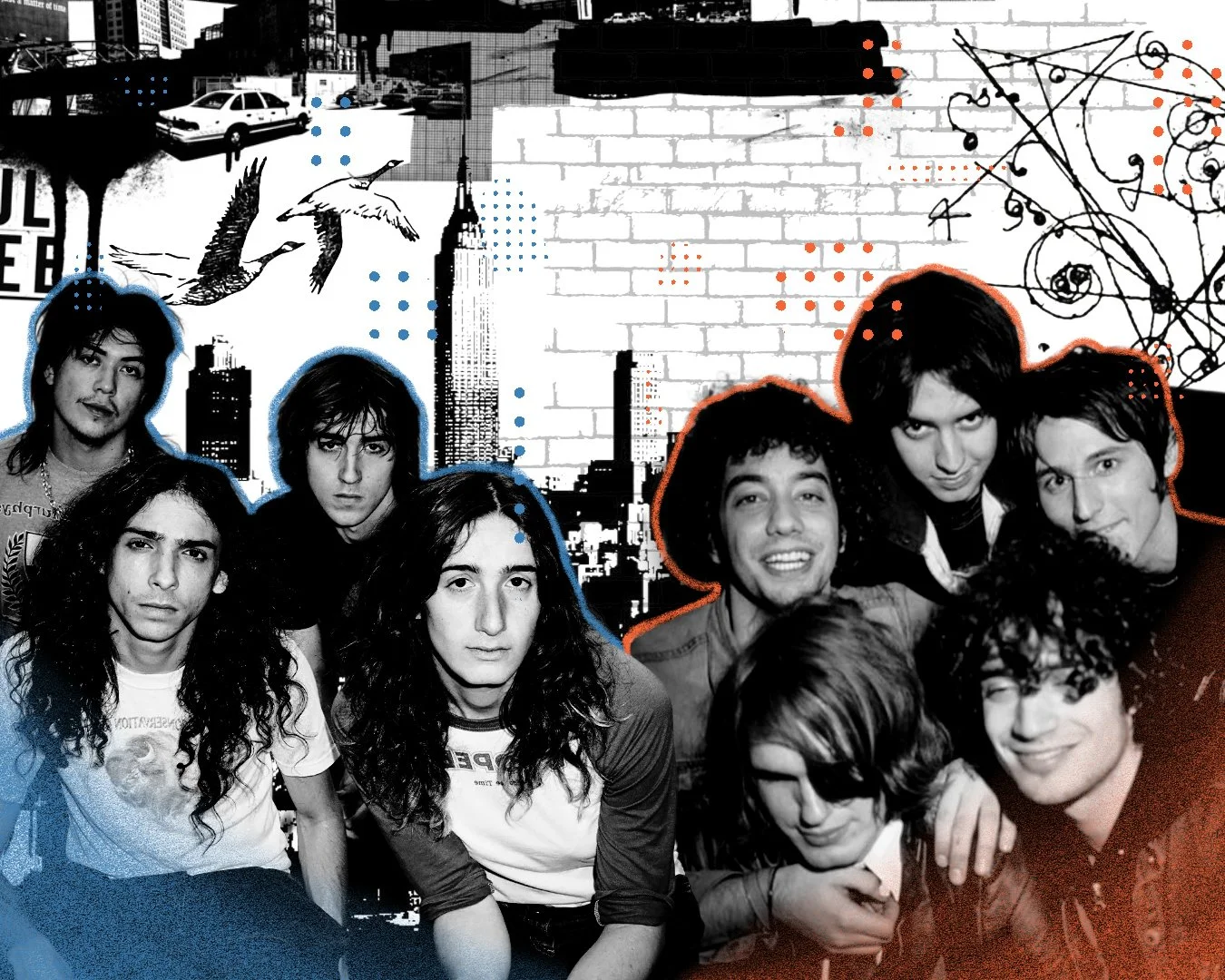
At first glance, The Strokes and Geese share only ostensible similarities. They’re both indie-rock bands from New York that lean towards a post-punk sound, and both feature an enigmatic lead singer with erratic vocals. The sonic similarities seem to end there — The Strokes are proud leaders of the early 2000s garage rock revival with dashes of synth-pop and new wave, while Geese ventures more into art and experimental rock with a touch of 1970s classic rock, funk, and Americana — the career trajectories of both bands contain surprising parallels, suggesting that Geese’s style will spearhead the digital age of rock like The Strokes’ sound inspired the wave of garage-rock bands earlier this century.
The initial commonality between the two bands lies in their shared hometown, the Big Apple, and the musical influences they drew from the city, namely the New York band The Velvet Underground. The Strokes have cited the iconic avant-garde group as key sources of inspiration, while Geese have paid homage to the collective during their ‘Getting Killed’ tour. Considering their impact on music history, The Velvet Underground has practically influenced every alternative artist ever at this point. Yet, both The Strokes and Geese seem to tap into the same elements of The Velvet Underground’s catalog — namely, lyrical and guitar delivery — and tailor them to their own recordings. The Strokes frontman Julian Casablancas often evokes the deadpan, reflective vocal style of Lou Reed, The Velvet Underground’s lead vocalist, much like how Geese frontman Cameron Winter mirrors Reed’s poetically existential approach to relationships. Albert Hammond Jr. and Nick Valensi, The Strokes’ guitarists, and Geese guitarist Emily Green also lean towards stripped-down rhythmic textures first mastered by Reed and guitarist Sterling Morrison. The rich musical history of The Strokes and Geese’s home base ultimately played an undeniable role in both bands’ development, even if they took this influence into their own unique directions.
The Strokes carved out their own sound early in the 2000s, building their sonic image around the gritty lifestyle of the New York streets. Formed in 1998, the quintet met in high school, quickly establishing themselves as dedicated rock hustlers with charming personalities before breaking into the mainstream with their debut album, Is This It. The reception to the 2001 record was nothing short of explosive, both commercially and critically, marking a pivot from the aggressive maximalism of late-90s rock to authentic garage rock, effortlessly incorporating elements of synth-pop and new wave. The album has since cemented its place on numerous Best Album lists and in the public consciousness, with groups like The Killers, Arctic Monkeys, and Wet Leg crediting much of their sound to The Strokes. Though the band’s following albums did not quite match the success of Is This It, each project further established The Strokes as the leader of a new post-punk era in rock music and a defining band for Gen X and millennial listeners alike. The band’s erratic lead singer, Julian Casablancas, also made himself a household name with experimental solo releases and side projects, like the synth-heavy The Voidz. Yet what’s most captivating about The Strokes’ frontman is his tough, wistful vocals, which provide an emotional contrast to the group’s gutsy guitars.
These elements definitely made The Strokes a mainstay in the rock scene, but it’s these exact components that make Geese stand out as a potentially generational rock band for Gen Z. Unlike The Strokes, Geese didn’t strike gold with their first album, the unreleased A Beautiful Memory. The high school friends recorded the EP in 2016, and they only attracted studio attention with their first official studio album, the broody Projector. The group gained a cult following with their abrasive second release 3D Country. Aside from the New Yorkian upbringing and high school bonds, Geese’s slow beginning didn’t have many parallels to The Strokes’ meteoric debut — that is, until the release of the band’s third studio album, Getting Killed. The acclaim for the September 2025 release was immediate, receiving raving reviews from critics and inciting an extensive world tour for the band, as well as commercial success previously unknown to the band. The group’s diverse instrumentals, technical abilities, and vocalist Cameron Winter’s whiny belting demonstrate an exciting new direction for art rock, but the members are not limited by genre in the slightest. Winter’s late 2024 release, Heavy Metal, leans more towards a folk style that suits his strained singing, not only earning him immense critical acclaim and comparisons to Bob Dylan, but also a performance at the iconic Carnegie Hall immortalized with a concert film by director Paul Thomas Anderson, making him one of the venue’s youngest performers.
Admittedly, Geese is still hovering over the mainstream, but its wildly passionate fanbase marks the desire for a fresh take on rock, similar to how The Strokes revived pop-punk early in the century. Geese has even cited The Strokes as an influence in their sound, which goes to show that The Strokes remain an impactful fixture in the modern rock scene. Geese has taken The Strokes’ new-wave style and moved further into experimental art-rock, earning them critical success comparable to The Strokes’ debut. The bands’ sounds start with common New York influences and deviate into different genres, but their parallel career trajectories hint at a new age for rock music, led by Geese’s wild metaphors and captivating guitar riffs. If The Strokes gained notoriety for bringing an invigorating change of pace to the rock genre and ultimately inspired Geese to do the same, every sign points to Geese leading the current rock scene in a new direction as well, maybe even influencing a future, genre-defining group that will bring their own interpretation to rock.