
Palestinian Pioneers: UT Alum Aims to Preserve Father’s Musical Legacy in Memoir
Inside the fourth floor of UT Austin’s Hearst Student Media Building, Sam’an Ashrawi sits down for an interview. He leans back in his chair as he looks around the meeting space dubbed the “War Room” by Texas Student TV members.
Written by Aneesh Tiwari
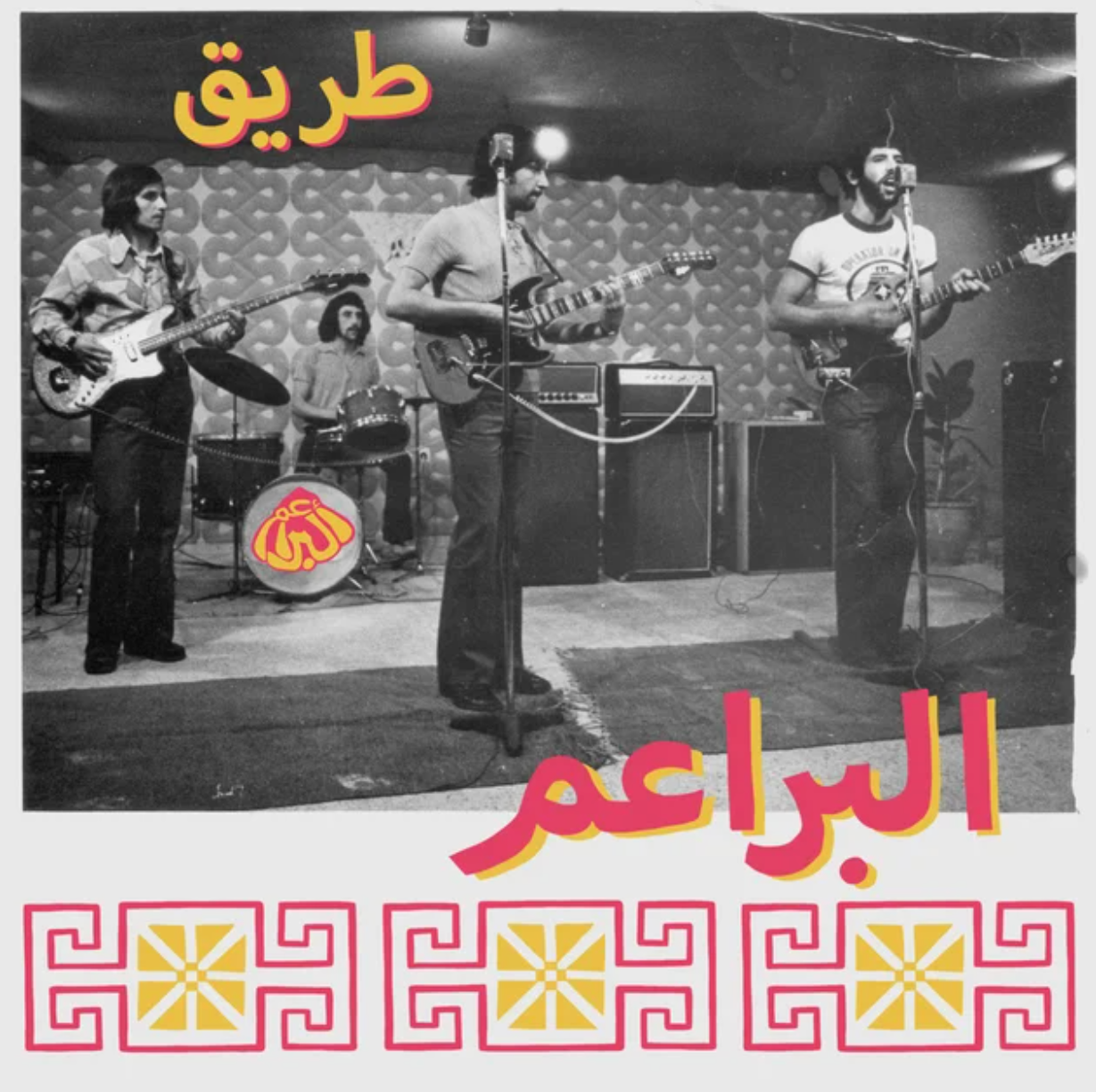
Photo Courtesy of Al-Bara’em
17 years ago, Sam’am Ashrawi sat in that same room, leading his newly minted, BET-inspired show, Longhorn Hip Hop. He didn’t come back to his alma mater to recount old memories as a clean-shaven 20-year-old film student, or to regale his post-grad tales of interviewing rap legends like Bun B and Thundercat. The Houston-based, self-proclaimed music storyteller stopped by his old stopping grounds to discuss a passion project years in the making.
Earlier this month, Ashrawi published his first book, “Baba was a Rolling Stone,” putting his “baba,” or his father,” at center stage. Ashrawi’s father, Ibrahim, grew up a refugee in West Jerusalem to Palestinian parents. From an early age, Ibrahim’s parents surrounded him with music, while surviving the military strife of Israeli occupation.
“My dad’s dad loved to put on the Muslim call to prayer,” Ashrawi said about his late grandfather. “He would make his coffee, read his newspaper, and then he would throw on some classical music.”
In part thanks to the generational power of music, Ibrahim would go on to front the first-ever Palestinian rock band. Despite the feat, he never brought his band up to his son, a fervent hip-hop head, until Sama’an was in high school.
“The excuse he gave was that we’re just too humble.” Ashrawi said. “When I started seeing pictures of it, I was like, no guys, hundreds of people showed up to the concerts.”
Active from 1966 to 1973, Sam’an’s father’s band, called Al-Bara’em, or “The Blooms” in English, took inspiration from the kings of the classic rock era, like The Beatles and The Kinks, while incorporating Arabic melodies.
Al-Bara’em got their start performing covers of songs by Lebanese singer Fairuz. The Palestinian band put a spin on the melodist’s velvety vocals, mashing her classics with their signature rock and roll style. It wasn’t long until they started putting out original music.
In 2020, after discovering old recordings from his father’s band, Ashrawi released Tareeq, which became Al-Bara’em’s first single to be uploaded to streaming services. A year later, he uploaded three more recordings, which were released as part of a self-titled EP. The four songs feature mellow harmonies interlaced over psychedelic strumming and percussion, reminiscent of tunes found in the Western mainstream.
The EP’s prog rock sound features minute-long solos on tracks like “Ishraq,” where the keys and bass guitar shines through, resembling a Clapton-esque breakdown. The record’s highest streaming song, “Tha’er,” starts as a low-tempo, soothing ballad, but picks up the pace through precise electric guitar, which creates a haunting tone.
Lyrically, the quintet, which featured five Ashrawi siblings, used their musical platform to highlight the struggles of the Palestinian people.
“They were singing what was happening in Palestinian society, and no one else was doing that.” Ashrawi said. “Without intending to, they kind of became the voice for the youth at the time, not just in relation to being occupied by Israel, but also within their own Palestinian society and the things they were viewing.”
Al-Bara’em’s song Tareeq, for example, bases its lyrics on a poem penned by Palestinian songwriter Jibreel Al-Sheikh.
“My people (folks) … my people (folks). / They are constructed of the bones of the earth. / They are the soil and rocks in a wall. / The remnants of a planet after annihilation… / A story where I’d lost my home (country). / And in perishing I have a brother lost.”
The members of Al-Bara’em grew up in the shadows of the 1948 Arab-Israeli War, which included fighting between Jews and Arabs living in British Palestine after the United Nations partitioned the territory. The war resulted in Israel gaining its independence at the cost of the displacement of over 700,000 Arab Palestinians, an event known as the Nakba. 20 years later, as the band started, Israeli forces invaded Palestine in the Six-Day War and captured the remaining territories such as the West Bank and Gaza Strip.
After the 70s, the band separated, and lead vocalist Ibrahim immigrated to the USA. Nearly five decades later, Sama’an and his father set out on a road trip across the States in an effort to find the band’s guitarist, which is the primary story the book centers on. In addition to the Jack Kerouac style adventure, Ashrawi weaves in his own experiences through the memoir’s 239 pages, including an anecdote of interviewing DJ Khaled.
As Palestinians continue to fight against Israeli oppression in the Levant, Ashrawi hopes his upcoming memoir will shine a light on Palestinian resistance but also their art.
“I think the book is going to be really important in terms of humanizing the Palestinian experience,” he said. “You’re getting this American music story that just happens to be told by Palestinians…and I think this is just going to show that we are people with hopes and dreams who make mistakes, who do hurt people, who are hurt by people, and I think that's really what being a human is about.”