
Interview: Rum Jungle’s Benny McIntyre Goes from New Castle’s The Cambridge To Austin’s Zilker Park
The vocalist of the Australian indie-rock band breaks down the band’s history and mindset after their ACL debut in the sweltering Zilker Park heat.
Written by Valeria Mota
Photos by Mckenna Sefcik
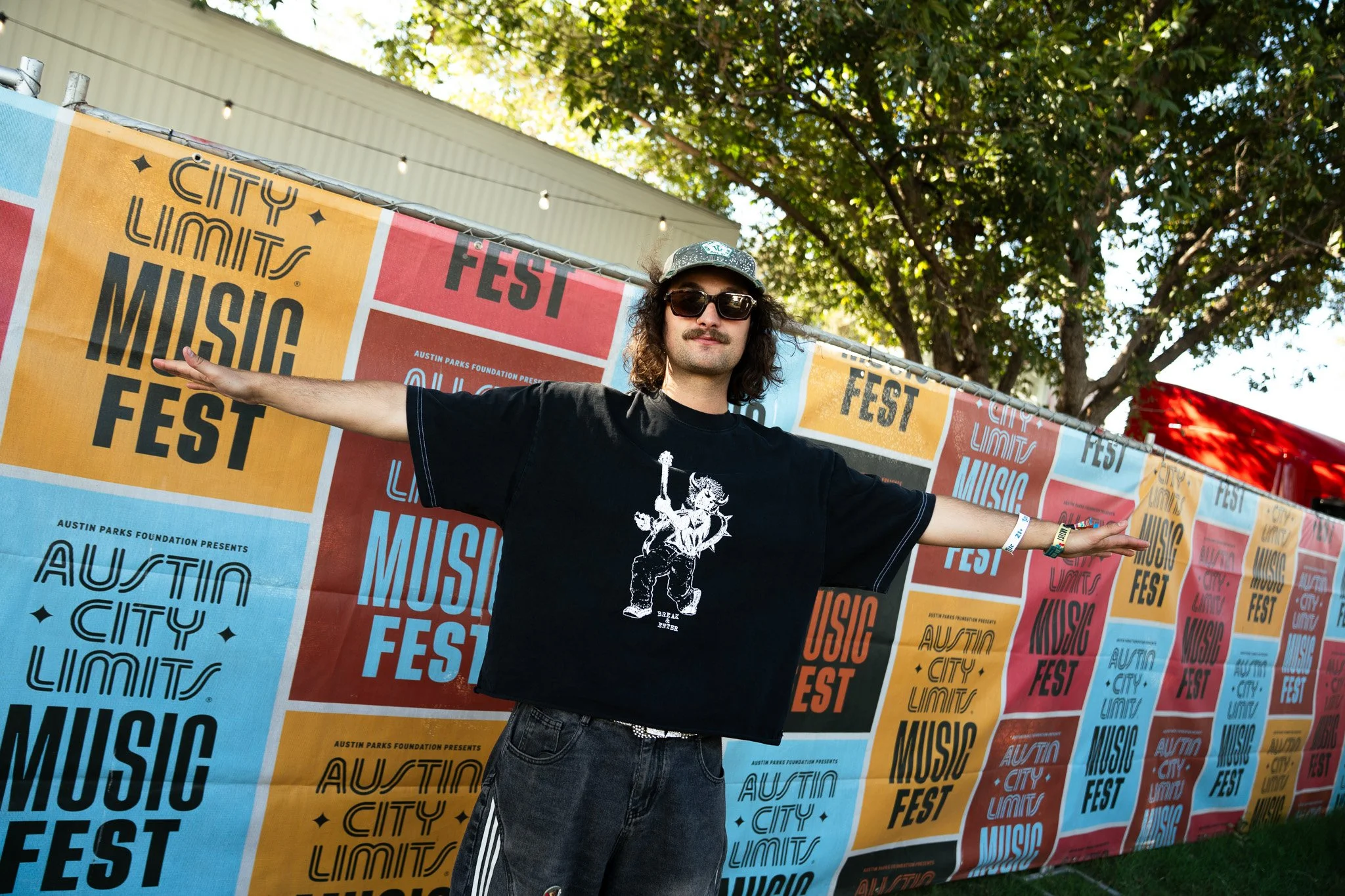
The land down under has brought many indie-rock acts, but none quite as colorful as Rum Jungle. The Australian quartet — vocalist Benny McIntyre, guitarists Josh Giles, bassist Michael Kolmajer, and drummer Frazer McDonald — ended their North American run at the iconic Austin festival with a Sunday set filled with groovy guitar riffs and catchy choruses. Afterglow sat down with the band’s frontman, Benny McIntyre, to discuss the group’s Austin experience, songwriting expectations, and approach to American audiences.
Afterglow: You started by playing backyard parties in Australia, and now you're here at Zilker Park playing ACL. Where's your head at? What are you feeling right now?
McIntyre: We just came off the stage. We just packed up all our gear, and we were shooting back to the artist village in this golf buggy, and I was on the back, and my legs were kind of swinging, and I was talking to our booking agent, Hayden, who's a wonderful dude, and I was like, “This just feels like a dream; I can't believe this is real.” This is the last show of our tour, and so it's like, not necessarily a weight off our shoulders because it hasn't been a weight, but it's like, “Oh wow, it's over.” I feel like when you're in the moment [of] touring, you don't really have a second to think about it, and I think driving back on that golf buggy, I was like, “What am I doing here?” Because it was exactly that.
There's this venue called The Cambridge that sadly got shut down in Newcastle, our hometown in Australia, and we were joking, “How's this compared to The Cambridge?” Which was like a tiny little stinky venue, but it was the iconic place in Newcastle. Coming off stage [at] ACL … Like there were a couple of people here to see us, and that felt so incredible. And here we are in America, and I never would have thought that I would be here. I feel so insanely grateful that so many people did turn up and jumped in the heat. So it's been beautiful; it's been really good. Still trying to reckon with it.
Is there a difference for you, as a band, performing for a festival crowd versus at a smaller venue like The Cambridge you were describing?
It's the exact same show. I think the only difference for me is just that I have a little bit more room to run around. That's honestly it. We've played some shows [on] this tour where there hasn't necessarily been as many people, and the stages have been small as hell, but it's still the same show everywhere that we go. I think it makes it a lot easier when you have the sunglasses on because you’re kind of like, “Sweet. I can't really see anything, so it's like I'm gonna play the exact same show that I'm gonna play to a few people in a small venue versus however many people on this massive, massive festival stage.” And like I said, the only difference is that I get to run a little bit further. I took advantage of the huge stage, and when I took off my guitar at one point, I got to run from one end to the other, and I was like, "Whoa! Fucking hell, am I going to run all the way to the end of that?” And I did, and it was sick, and it was amazing.
But the small venues, they're just as special. As long as there's a few people there to see us, that's what really matters, you know? It doesn't matter what size the room is. If there's one person to see you, well, they came, they've spent their whatever night it is to come and spend it with us. So I want to make sure that they're getting the same exact show that someone would on a massive festival show.
I hope the heat wasn’t too bad when you were running around.
It wasn't as bad as I expected it to be, to be honest. I thought I was gonna melt, but I've had more shows where I've been like, “I feel like the Wicked Witch of the West,” you know, melting. And this time, I feel like because it was so hot and the sun was on me, I was like, okay, it's like keeping me dry enough that I'm not dying. But it was so much fun, honestly.
You've played South by Southwest in Sydney, and now you're here at ACL in Austin. What do you think Australian bands get wrong when they're performing in America? And what do you think American bands get wrong when they're performing in Australia?
Well, I don't know if there's necessarily a wrong or right. I think it's like you just kind of play to the audience that you're in front of, right? And I think we've spent so much time playing to different audiences in Australia, in America, in Asia, in the UK … and if you've been there before and you come back, your whole idea of how that audience is going to be is based on that last show. For example, we played a couple of shows in Melbourne when we were starting out, and everyone was kind of just watching. And, as an artist, when you're playing, when people are just standing there and watching, you’re like, “They hate me, they don't want to be here. They think I'm shit.” But at the same time, when I watch a band, I'm there with my arms crossed, not moving a muscle, and that's not because I'm not enjoying it; it's because I'm watching and listening. You just learn to go, “Okay, everyone's not necessarily jumping and moving and going crazy, but I can still appreciate that they're listening to the songs, because that's exactly what I would do.”
For Melbourne, there were a few shows where it felt like they weren't really moving a whole lot, and actually, last time that we played, it was pretty loose as well. I think you just take every single venue as it comes, and every single audience as it comes. I don't know if I've necessarily seen enough bands in America having to adapt to an Australian crowd or vice versa, but in our experience, [we] just play the show that you're going to play no matter what, and you might be a bit worried while you're playing, but today, for example, [we’re] so grateful that they stood out there in the boiling hot sun, and at the end of the show, some of them jumped for “Everything is Easy,” and that is more than I ever could have asked for. I was out there yesterday watching Finn Wolfhard, and I was like, “I am about to catch fire.” So the fact that a couple of people jumped up and down for our set so early in the day, I can only be grateful.
The band's name actually came from your dad's ‘70s band. What does he think about Rum Jungle right now?
I'm very lucky that I have a very loving and supportive dad. I know that there's a lot of people out there that might not be as lucky as I am to have a father who is insanely supportive, and he's a huge reason that we even kind of got the band rolling, right? We were kind of just three mates before we had Frazer in the band, smoking cigarettes on this disgusting balcony back in Newcastle in this shared house that we had, ripping around with a couple of acoustic guitars. I was writing songs, and I was like, "Oh, what do you think of this, Dad?” He was like, "Well, why don't we record them?” Because he's retired now; he was a lecturer at Newcastle’s University (University of Newcastle). He'd been in the Australian music scene for a lot of his life, and it was definitely him who was like, "Hey, why don't you give it a crack?” He definitely pushed us to start, and I'm real lucky that he tells me that he's proud of me pretty much every day. I appreciate him more than I could probably express in words, and same with my mum as well. If I was to give you a short answer, I think he's pretty much like, “Come on son, let's go!” Carrying along the Rum Jungle legacy, you know what I mean?
Your album Recency Bias hit number one right away. Did you feel a pressure to live up to that hype with your new songs?
Honestly, no. When you release that first album, there is so much pressure that you put on yourself. No one's putting it on you, but you as an artist, you [think], “I'm about to put out my debut album, and some bands that I idolized exploded and became the biggest bands in the world off their debut album.” And there's so many different careers and so many different paths, and I think the idea of a debut album is so insane for a band. But once it's out, and once you get it out, and once you start playing it, you're kind of like, “Oh, I did that, I can do that again.” And you just kind of keep writing, and at the end of the day, for us, the most important and exciting part of being in a band is writing music. Yeah, it'd be nice if you can keep improving or whatever else, whatever improvement is in whoever's eyes. But every single project that we've worked on, beyond the last one, we've been like, “This is my favorite work that we've ever done, and these are my favorite songs in the entire world.” And then you release it, and then you start working on the new thing, and you're like, “What the hell? I don't know what that was; this new stuff is the best thing.” I don't think we necessarily felt the pressure; we just want to love what we're making at the time and appreciate what we've put out.
Out of all the songs that you've put out so far, or at least the ones that were on your ACL set today, which one would you say best represents Rum Jungle right now?
I would probably say “Quiet When You're Listening.” We have this pretty big back catalog, and we've gone through a lot of influences and genres and sonics that we've really enjoyed. But “Quiet When You're Listening,” it's based around a riff; it’s very introspective and really [speaks] from the heart. I think our earlier stuff was almost like us trying to be something that we thought we wanted to be, and I think since then we've found our own niche and been able to be really honest in the music, and everything that we're working on that's unreleased now is the same. I'd say “Quiet When You're Listening” probably encapsulates that the best.
Last question: What would you tell the version of yourself that played all those backyard parties at Newcastle?
I have no idea. I feel like there's nothing I could say that would make any sense … We're like, “Imagine if you could go back in time and tell those three and then four absolute gronks on this disgusting balcony, fucking covered in cigarette ash, ‘All right, like you're gonna be in America playing almost 20 shows in a month, and you're gonna finish it off at this festival called Austin City Limits, and it's gonna be so much fun.’” I don't even think my brain back then would be able to compute that. I think it would probably be like, “Keep at it, bro. Come on, keep working, keep writing music. That's what it's about. Don't get lost in the sauce.”
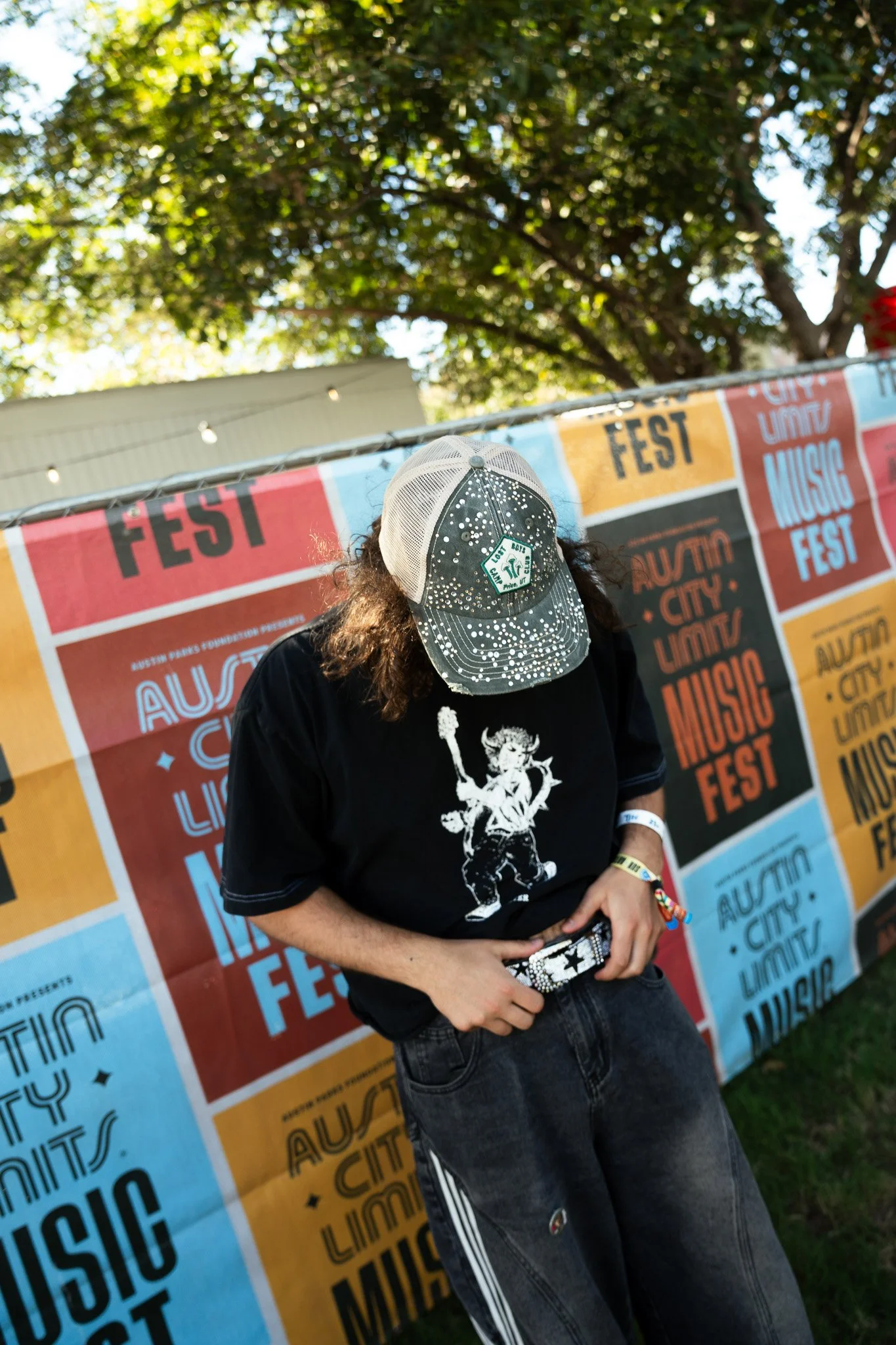
You can follow Rum Jungle on Instagram and TikTok and stream their music on Spotify and Apple Music.
This interview has been minimally edited for clarity and length.