
Interview: Bowling For Soup’s Jaret Reddick Still Plays His Greatest Hits
The Bowling For Soup vocalist reveals the Texas band’s approach to social media, comedy, and the secret to making every audience member leave the group’s shows with a smile.
Written by Valeria Mota
Photos courtesy of Matt Morris
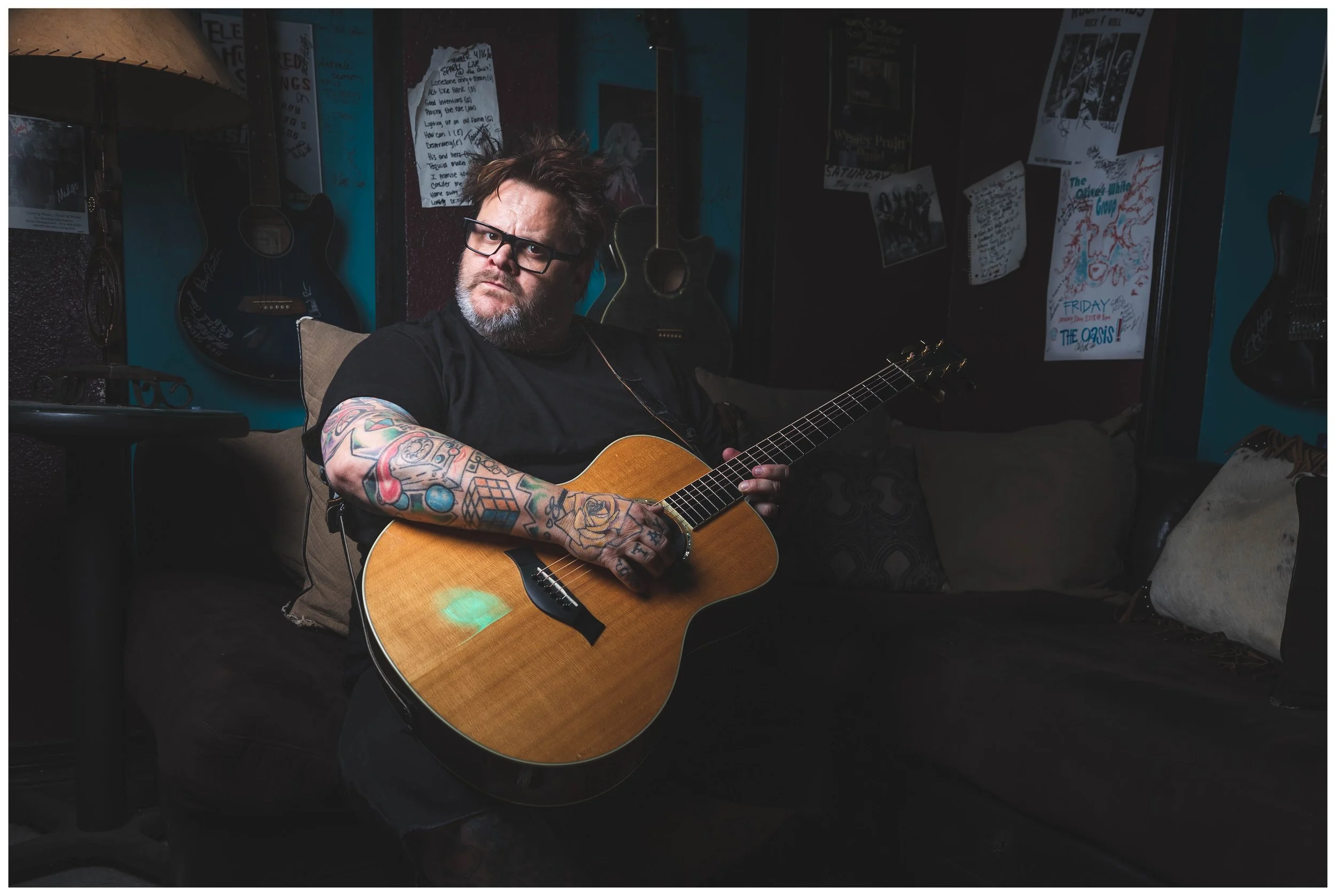
For the past three decades, Bowling For Soup has proudly proclaimed itself as “easily the 9th greatest pop-punk band in history.” Now, with back-to-back performances as an opener for Simple Plan’s ‘Bigger Than You Think!’ tour, appearances on the Vans Warped Tour, and its own headline run, the humorous pop-punk collective does not plan to lose that title any time soon. Afterglow sat down with the band’s frontman, Jaret Reddick, to discuss Bowling For Soup’s home state, public perception, fan interactions, and Reddick’s biggest advice for young musicians.
Afterglow: You've been on the road all year, from the Warped Tour to Simple Plan to your own headline run. What's a night this year that reminded you why you still do this?
Reddick: Oh man, there's been several of them. It's been such a cool year because we did Australia and the UK, and then we did the U.S. with Simple Plan, and now we're back out headlining again. And I got to say, getting back to the headline shows in some of the smaller venues, there's just an electricity that happens there, and that's really the reminder. When you can see everybody's face up close and see them singing along and smiling, and you got people bringing their kids to their first show ever, then you got people that have been coming to see the band for 25 years, and you can see them all. That's been a really, really nice reminder. I'd say probably, you know, the first show back, really, which was which was Grand Rapids, going in and a sold-out show, and being able to get up there and play for 75 minutes, so not just playing the hits, getting to play some deep cuts and watching people's reactions when we do that, that was that was a really big reminder of why it is we still do it.
Do you ever feel pressure to only play the hits? How does that influence what ends up on the set list versus what doesn't?
I don't think that it's a pressure. I think it's just knowing what I would want to hear if I went to go see a band. I'm in this for me, but I'm also in this to entertain people, and so I've never been one to shy away from the hits. We definitely have friends that, in the past, maybe they have a hit song, and then they're just like, “We don't want to just be known for that,” and I'm like, man, at least you're known for something, embrace it. So people ask me all the time, “Do you get sick of playing ‘Girl All The Bad Guys Want’?” I'm like, how could you ever get sick of playing something that starts with that riff that's undeniable and [seeing] the reaction that people have? I don't know how you could ever get sick of that feeling. I mean, if it's a short set for us, you're getting the hits, and we'll pretty much just tell you. If you're coming to see us at ‘Warped’ Tour and we're only up there for 35 or 40 minutes, it's pretty much the hits. That's really what the majority of the people want to hear.
Come see us at a headline show if you want to hear something that you like off the first album, or you want to hear a cut off of Let's Do It for Johnny! or something. Come see, because we change that stuff up all the time. But no, never any pressure to play the hits. I certainly enjoy it, and so does the band. We sort of have this thing where there's a list of songs where it's like, okay, every show we have to play “1985,” “Almost,” “High School Never Ends,” “Phineas and Ferb,” “Ohio,” then there's three or four more that [we’ll play] if we have time, [but] it's kind of obviously those songs. I wouldn't even say it’s a problem; it's a good situation to be in when you know the songs that you have to play are songs that everybody in the crowd knows, even if they're not a big fan.
You mentioned Warped Tour. What does it feel like to be a part of it considering how much it means to the generation that grew up with your music? What do you think has changed about it?
It's a big deal for us because we've been there since 2003, so 10 years in, and we've been a big part of it ever since. I think we're like the fifth, as far as bands that have played it the most; I think we're fifth or fourth, and that's a big deal for us. It's such a big brand; it's such a big part of people's childhoods, people's adulthoods. We just absolutely love Warped Tour. It's one of those things where I never want to be excluded. We've only missed one since like, 2017, and that was this year; we didn't get to play D.C. because we had a D.C. show with Simple Plan [on a date] that was too close to it or whatever, so I had a lot of FOMO.
The big change is that it's not summer camp anymore. It's not the whole summer, you know, where 80 bands [are] all in this together kind of thing and making lifelong friends. It was never really about the shows; it's about the hang. Warped Tour for the bands, it used to end by 6:00 or 7:00 at night, 8:00 at the latest, and then you just had the rest of your night just to hang. Like I said, it was like summer camp for us, so that's changed because it's more of a pop-up, full-on festival thing now, but to me the vibe is still there. You still definitely get that warm feeling of being there and being a part of something.
Speaking of changes, Bowling for Soup has been through a lot of eras, from MTV, MySpace, and now TikTok. How have you guys adapted to those eras and changed your approach with how you connect with fans?
It's just a matter of just staying up with it, you know? We've been together 32 years, and I mean, we're not young, but you've just got to keep up, and it's not easy for everyone. For me, it's been a really nice evolution into this whole TikTok world thing because I enjoy it. I mean, I'm a theater kid, so being able to make people smile in 30 seconds, 60 seconds, 90 seconds, or whatever, I love it, you know? And also, it gives me a really nice platform for mental health stuff that I talk about a lot. I just happen to be one of the older guys that have really embraced it. Our first album came out on cassette, and then it was CDs, and then it was people stealing it, and then it was like people getting it; now it's streaming. We've definitely managed to just evolve with it, and that's it. You got to roll with the punches. I know that's a little cliché, but it really is true, you can't really help it. You can't help the way that things move and evolve and flow, but you can embrace it and use it and enjoy it, and it really teaches you that you can't take anything for granted, and that's not a bad lesson to learn and to know.
On TikTok and in the band’s songwriting, humor plays a huge role. Do you think there's any downsides to that? Do you ever find that some people don't take the music as seriously because of the humor?
Yeah, I think definitely early on that was a thing … I mean, when we first started, we didn't really know any better, and then as pop punk became a thing, there were other funny bands; we just stayed funny. Blink-182 went on to be way more serious, and Sum41 went metal, and they all made great records, but for us it was like, this is who we are. So there's no real reason for us to follow suit and try and get crazy and invent some new thing or reinvent ourselves or whatever. As far as musically, this is what we do, and we're here to make people smile, and I like that. That's who I am as a person, and I just write as I talk. Definitely early on, it would be really where people [said], “Oh, that's the funny band, oh, they're silly, oh, they just get on stage and tell not-funny jokes,” but then you're together 20 years, and then you're together 30 years, and it's really hard for someone now. Like we don't really get bad reviews anymore, because what are you gonna say? You know, it's lasted this long for a reason. There's more people coming to our shows now than ever, and there's a reason for that; it's because I think people need a break.
You know, it's funny. There's a time and a place for every kind of music. I love heavy music. My wife loves heavy music. My son loves heavy music. But we also, you know, listen to, you know, The Mamas and The Papas and the Carpenters, and so that's what's so beautiful about music and the magic of it: you don't have to just settle into one thing. So we're that band that you put on after a long Friday, and it's the weekend and you just want to smile and maybe laugh a little bit, but then also have like a lyric that makes you go, “Oh, okay, well, that made me think a little bit,” you know? And so yeah, I definitely think we get taken a lot more seriously than we once did. That's for sure.
That's fair. Now that we're on the subject of humor, what’s the funniest thing that a fan has done at one of your shows?
Oh my goodness. There's so many things. Fans are just creative; that's for sure. But it's just kind of nonstop, you know. That and our show is so interactive that, especially if you bring a sign or if you wear a shirt that you made or whatever, there's a good chance I'm going to talk about it. Just the other day, we played the Texas State Fair, and this kid was in the front row, and he had this sign that said, "Let me play ‘Girl All the Bad Guys Want’ on guitar,” and we played it first, and then we played another song and another song, and by the fourth song, he's still holding the sign up. And I'm like, "You were here earlier, you know, when we played that. What do you think? We're just gonna play it again?” And all of his friends start, you know, hitting him on the arm and ribbing him and stuff, whatever. And he put the sign away, and I go, "This is your lesson to always make a two-sided sign, be able to turn that thing around.”
I love the interactiveness with the fans, and they're always real creative, and I love that aspect of the whole thing. In Australia recently, we had a group of boys that dressed up as the entire cast, and I mean like eight people, [as] the entire cast of Phineas and Ferb, and the costumes were really good, like really good.
That sounds like a lot of fun. You mentioned the Texas Star Fair and Bowling for Soup is based in Texas. Does the state still feel like a home base for you?
Absolutely. We wear it on our sleeve, literally. This is our home; we love it here. I won't ever leave; I don't think Gary will ever leave. We have so many great memories of Austin, and it's such a big part of our journey, and still so great … We played a tailgate last year, and it was just such a party and so much fun, and I hope we get to do that again because I was really hungover last time, [so] I didn’t get to enjoy it nearly as much as I would have liked to, but yeah, Texas is definitely home for us. And as I said, last week we played the Texas State Fair, and you look out in the audience, and there's so many friendly faces, and you know, you do “Ohio (Come Back to Texas)” and the place just erupts It's a special place to us, that's for sure.
“Ohio (Come Back to Texas)” is going to resonate a lot this weekend in particular while the Red River Showdown is happening.
And you guys have your own version of it that I made up for you. In fact, I probably need to go dig that up and release that because this is a big weekend.
Going back to your shows. Bowling For Soup definitely has a reputation for unpredictable shows. How much of it is planned versus just winging it? Is there a lot of room for improvisation?
There's a big reason we don't play tracks, because we don't want to be locked to anything. We don't really use a set list; we use a list of songs. So a lot of times, if you get a set list from our show, it will have a really big list, and it'll say, "Here is a list of songs that Bowling For Soup might play on such and such date.” But the plan is normally what we're going to start with and what we're going to finish with, and then what happens in the middle is, you know, it is what it is.
You know, with banter, obviously certain things work at certain times, so you sort of recycle those things, but as far as like, the overall jokes and the messing with the crowd and all of that stuff, we don't rehearse any of that. No, no planned bits. In fact, we have kind of a rule against planned bits. If somebody has an idea and they bring it up too quickly, it's like, I don't want to do that because it won't seem fresh, you know? I don't want a rehearsed bit; it just needs to seem organic, and like, if there's not a fear of messing it up right in the middle of it, then it's not fun. And then you got to be quick on your feet and quick-minded, and luckily, even through member changes, Rob does a great job of keeping up, and Gary's got a mic now, and so we haven't lost a step. It's one of my favorite parts of our show, and I think it's a big part of [it]. Once you get used to our pace, it becomes a favorite part of most of the fans as well. Obviously, we get a hater every once in a while that's just like, “You guys talk too much!” And it's just like, well, you know, if you came to hear songs, you came to see the wrong band. I say that, obviously, jokingly; we do tend to play some songs, too.
Looking at the pop-punk scene now, what do you think younger bands are getting right that bands in your generation didn't?
I think the hard part about that question is that it's never just been an easy navigation. From the band standpoint, it's always uncharted waters because everything changes all the time, and now it's navigating social media and finding ways to get people to listen to your music. It's not cut and dry these days, you know? Like, people have access to literally everything, and so you have to set yourself apart as best you can.
But I still love the community. The fans, the fans absolutely get that right. There's an inclusiveness to all of it, and I love the camaraderie between the bands. That’s probably the big thing, I think, whereas I've heard a lot of my peers talk about how when the genre was really, really big in the early 2000s that there was a bit of competition, and I really never saw it that way. I've always been a believer in everybody getting success is good for everybody else, and I never have seen someone else's opportunity as a missed opportunity for me. Just because somebody else gets this article in Spin magazine or gets to play this talk show or whatever doesn't mean that if they didn't that I would, you know? I think that's something that you just have to really learn, but now I really feel like it's just a sense of community out there and it’s this “we're all in this together” mentality, and I really love that.
Last question: what's the best advice that you give to a young band that wants to start today, whether it's a pop-punk band or any other genre?
My advice is everybody in the band should learn a side hustle. Learn digital design, learn photography, learn how to run lights. That's one less person that you have to pay for your own band, but secondly, it's really great for networking. Being able to take pictures of other bands and then go, “Hey, I took these photos of you, here you go, and I'm in this band,” or you know, “Hey, if you guys need help with digital design or web design” or any of that stuff, you know? Learn a side hustle, and it just makes your product better, because as you work for other bands, you get inspired to do other things … And then, obviously, you have to embrace social media, whether you want to or not. It's a big part of it, and you have to do it. So figure out who's the best at that, and you know, maybe that's their contribution to the side hustle thing, but yeah, you gotta hustle. That's the operative word: hustle.
You can follow Jaret Reddick on Instagram and TikTok and stream Bowling for Soup’s music on Spotify and Apple Music.
This interview has been minimally edited for clarity and length.